
 By Santiago Rivas @rivas_santiago Photo by Oscar Perfer @perferoscar
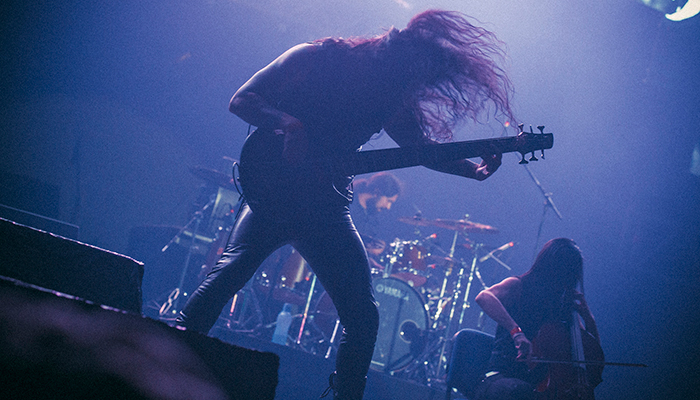
A week has passed, and nobody cares anymore about what happened at Rock al Parque. Since the festival is no longer the news, It is worthwhile to take advantage of the lessons that remain, for upcoming festivals and for the Bogota cultural calendar in general.
The first thing to say is that The relationship between Rock al Parque and the public has improved substantially, The same is true between the media and the festival. But it's not just a matter of how the festival is perceived. In reality, Rock al Parque has improved and continues to improve. The reasons are three very simple ones.
The first is that there is now an active and visible leader at the festival. The previous system, in which there was no real person in charge and simply an entity behind the festival, was creating several problems. Chucky García seems like an excellent choice to me, but it could be anyone, as long as it's a criterion that is clearly at the forefront of the Festival. It's not just about better management of the same old diversity, but also about organizing a festival that seeks to understand the public and not simply imply that, because it's free, it's a favor they're doing us.
The second is continuity. Chucky García has managed to retain his position, through a change of mayor and two changes in the leadership of Idartes. Perhaps people don't realize this, on either side of the political spectrum., But the fact that the festival is being held without taking into account the polarization, nor the infighting between the current and past administrations, makes it a reliable management.
The third is the change in tone that has taken place in recent years. Rock al Parque has found, thanks to I don't know who, a better way of managing its communications on social media, in the press and in front of the public. The voice of the festival (mind you, the voice as a construction of discourse, not the festival's narration), its way of speaking, was that of an adult trying to imitate what he understood as "rock", the tone of that false youth, like when some product tries to sell itself to the football public with a jingle that simulates a chant of a hooligan group, perfectly mastered. In other words: it was obvious that Rock al Parque was lying to us, even if it had good intentions. For about three years now, for example, they toned down the intense discourse on "diversity," but diversity continued to be respected. Actions speak louder than words.
On the other hand, the poster has improved. The competition to do it used to be more of a noise generator than a source of good ideas, Because good designers found neither prestige nor fair compensation in the competition; and bad designers are bad, of course. I didn't like this year's poster, and I think there's a general lack of effort, but I much prefer a poster made this way, with thought and a defined idea, to one left to chance by a jury committee, with no better options than what they received in the mail., provided that the paperwork for the call for applications was done correctly.
The key is in the details: these days, it's no longer a matter of chance whether the press area will be good or bad. Before, they were all over the place, sometimes installing high-tech computers, sometimes forcing us to sit on the floor. Nothing was clear, because nobody was learning anything. The fact that things tend to become more polished is an excellent sign.
There are things to improve, as always: The production design is failing, even though it has had improvements this year. In other words: the white shade netting is less noticeable, and it's a good thing that the "secondary" stages tend to grow (this year, the BIO stage had more people at times than the PLAZA stage), but the screen design isn't appropriate for a festival the size of Rock al Parque. Sometimes, really, less is more. But the main thing is the sound.
It's unacceptable that at this stage of the game we're still having technical sound problems at a festival that's been held 23 times, much less on the main stage. There has to be a way to make it work, a protocol or a plan. I'm not referring to accidents, which always happen, but to entire sets by bands that sounded terrible, or moments when people further back couldn't hear what was going on, or any of the many times the festival fell short in that regard. It's important that the same criteria, the same spirit that has kept Rock al Parque improving, somehow extend to the technical aspects. I don't know if it's possible, to be honest, but it would be good to see.
Overall, the balance is very positive. It doesn't matter if we like the bands that come every year or not. What's important is enjoying the music and giving Rock al Parque its due, the place it deserves. Perhaps if many of these strategies were adopted by other festivals, starting with communication with the public and increasing the visibility of their work, the audience for what have so far been pleasant moments, without much impact on the general public, would grow., who is always there, waiting to enjoy the music.
But the main thing is to understand the importance of Idartes for the city. It's not worth killing a good idea just because someone else had it. It's worthwhile, however, to shift towards the better and try to take good ideas to their full potential. Hopefully, Rock al Parque will continue on this positive path, giving us plenty to talk about (and hopefully, even more to draw). We'll continue to follow Zonagirante, keeping an eye on the festival that belongs to all of us.
[metaslider id=813]