
 By José Gandue @Gandour Photo by Simona Malaika @simonamalaika
I am 51 years old. Since the first edition of Rock al Parque, in 1995, I only missed the festival once, Because that year I was living in Argentina. Anyway, it was 1996, and I remember talking with my rocker friends from Buenos Aires about a new public event that the Bogotá City Hall had created and was funding, not only to support a growing music scene that needed a bigger space to develop, but also because they believed that That segment of the youth population could set an example of coexistence in a country that had been at war for a long time. The aim was to demonstrate to the rest of the population that, despite the stereotypes (the usual ones: Satanism, violence, despair, and countless other terms that sound like something out of a soap opera), local rock offered the possibility of showing that, in a failed republic where everyone had an excuse to despise their neighbor, The gathering of the masses under the musical argument could (and still can) save us.
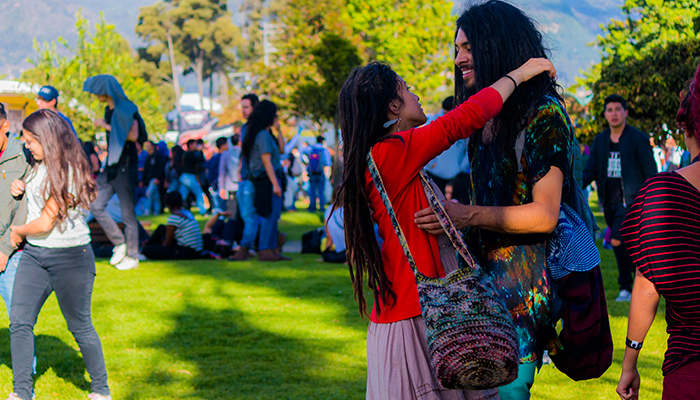
A few days ago, while on a radio debate on Radiónica, the public contemporary music station in Bogotá, the Music Manager of Idartes, the government entity that organizes the al parque festivals, said that The new generations believe that Rock al parque is just another concert, period. They don't understand the social function of the event. Alongside that, I've heard many acquaintances say, given the festival's shortcomings (and it has many, depending on how you look at it), and given the proliferation of new, privately-funded festivals, that there's no point in continuing with Rock al Parque. There's a discourse, despite Rock al Parque's continued existence over the last 22 years, that has been forgotten., because we have probably overlooked it and we don't think it's necessary to remember it. The time has come to clarify it again: Rock al Parque (and by extension, all festivals with that name) It is the most democratic expression we have among ourselves in the musical sphere. It's the only event where all social classes in the city truly come together, and where no one in the audience is above anyone else. All of you who have been to Simón Bolívar Park have witnessed scenes where a working-class son in a worn-out Sepultura t-shirt stands next to a princess from the north who can't hide the fact that she's wearing something new for the occasion. And they mosh together and celebrate being there together. They may never see each other again, but that moment is always magical.
That's the narrative we need to reclaim: We can have all the discussions in the world about how things are done at our festival, we can debate whether the lineup is good, whether the invited bands were the right ones, whether the district calls for submissions were successful or not—we can discuss everything, and we already do, a lot. But, above and beyond who governs the city, the discourse of coexistence must be recovered. We must once again feel proud to have an event that is not seen anywhere else in the world. Yes, there are many free concerts, a large number of public events, But none like Rock al Parque has established itself as a torchbearer for the defense of cultural rights, It speaks to the need for peace among citizens and to offering music to anyone who wants to listen, calming the beasts that reside within each of us. As our colleague Vice Colombia magazine says: This is the first festival held after the initial points of the peace agreement between the government and the FARC were implemented, following five decades of conflict. You know what? I wouldn't be surprised if someone at the Havana talks cited our festival as an example. There is no proof of it, but it's fun to imagine and it wouldn't have been a bad idea to have done it.
I repeat, I am 51 years old and I still go to the three days of Rock al Parque. That's when I feel most proud to be from Bogotá.
[metaslider id=813]