
By the Zonagirante.com team @spinning zone
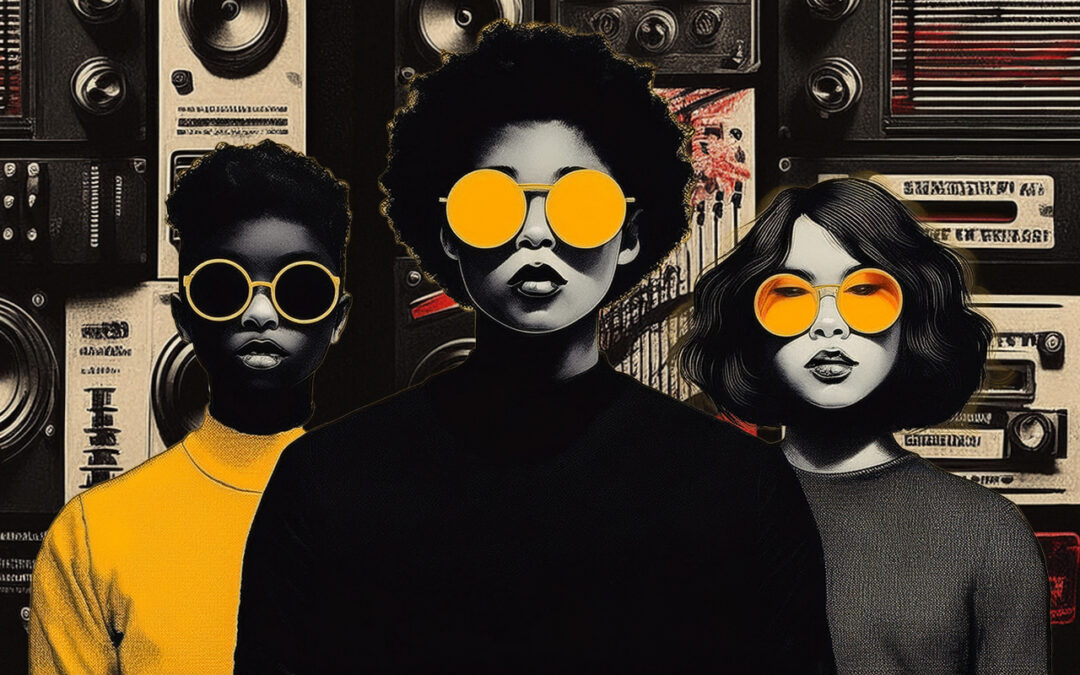
Cover art by Zonagirante Studio
Let's begin again.
We get asked this frequently, as if we had to justify the existence of the music made in our neighborhoods. The answer is obvious: of course it's worthwhile. But that's not the right question; as Investment is needed and what commitments must those who do so assume.
The private sector: more than just putting up a logo
It's not enough to just throw a little money at the problem and then inflate corporate egos because their brand appears on a stage. If the private sector wants to talk about social commitment to culture, it must understand that Independent music is not a marketing strategy, it's a collective need. The investment must go beyond the cosmetic: supporting training programs, funding recordings, local tours, and regional exchanges. And make no mistake: we're not talking about charity, we're talking about responsibility.
The public sector: from the neighborhood upwards
The state cannot simply organize giant festivals once a year and then forget about everything. Real commitment begins in the neighborhood: Auditoriums in multiple areas of the city, open all year round. Community recording studios, training programs for young musicians, and campaigns to promote local talent in public media. Culture is a right, not an accessory. We want to see investment in infrastructure, education, and promotion, not just in stages that only last three days.
What should they expect in return?
Neither the private nor the public sector should expect immediate returns as if it were a sales campaign. The gains are more profound: a more connected, more creative citizenry, with more spaces for interaction and fewer spaces for violence. And yes, eventually that translates into economic benefits, tourism, and civic pride. But if they're only investing with the expectation of next month's sales, they're better off staying away.
Technology and collectives: the heart of the matter
Technology is a highway, not a destination. It's useful for recording, distributing, connecting, and learning. But the real spark happens in collectives: that's where knowledge is shared, tips on free software are exchanged, gigs are organized, and collaborative networks are built. Collectives are the crux of the matterMusic is not made alone or in isolation; it is built in community.
Is it profitable to resist?
Resistance sounds romantic, but it can also be a strategy. To resist is to refuse to let music become a catalog product imposed by algorithms. To resist is to bet on authenticity, even if it costs more. And yes, from that anger, from that stubbornness, something more sustainable than any corporate contract that turns the artist into a number can be born. Profitability here isn't just money: it's identity, it's community, it's the possibility that music won't become background noise.
It would be easier with drawings, but…
Now for the karaoke version: We want auditoriums, we want studios, we want songs that resonate in our neighborhoods. We want audiences to grow, artists to multiply, and for music to remain an act of resistance and celebration.
Because investing in the local independent scene is not a luxury: it's an investment in everyone's future.
******
👉 “And since it’s not all just theory, here’s some fresh music: our Mujeres playlist, with 40 songs from independent Latin American female talent. Try it out, turn up the volume, and tell the neighborhood.”