
By José Gandue @Gandour
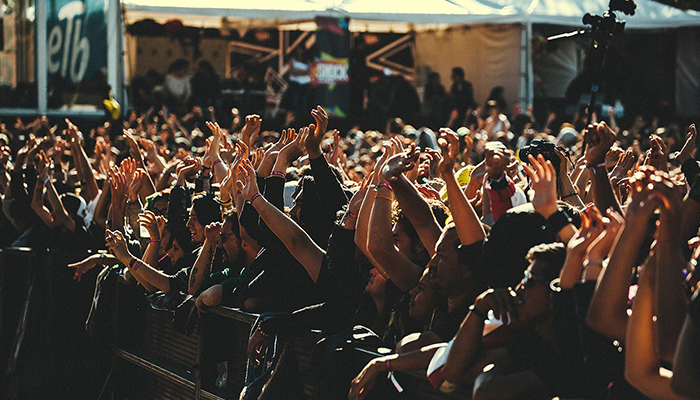
Photo by Oscar Perfer
Bogota friends, friends who are fans of good music in Latin America: I propose a game. Detach yourselves for a moment from your current political preferences, from your loves and hates towards the figures of government power. Forget all the memes and fake tweets you've seen these past few days and make a real effort not to dwell on how obtuse this or that mayor has been in conveying their ideas, creating uncertainty, anger, and ridicule among the news-observing public. Take a deep breath and let's talk almost exclusively about musical events. If you've already managed that, after a while of relaxing and disconnecting from social media for a bit, Let's talk calmly about the advisability of holding a large, eclectic, free-entry festival within the Colombian capital.
Let's start with a fact: The history of the "Al parque" festivals held in Bogotá began in 1995 and since then it has been used for its labeling references to the genres that were going to be represented by the guest artists. We must admit, twenty-one years later, that in many cases those labels have aged and have allowed nostalgic and rabidly severe radicals to close borders around the definitions and have tried, sometimes successfully, to keep new trends out of the events. They have managed to form ghettos that are at times irreconcilable and that promote divisions, which hinder the formation of new audiences and create gray areas in musical styles, which, due to their amalgamation of sounds, are excluded by inflexible decisions. Faced with the strict interpretations imposed over the years, we have seen the constant questioning of the participation of some artists who break the mold and who, curiously, Many of them are the best-known representatives of the local sound in the world: Sidestepper, Bomba Estéreo, Systema Solar and others.
We have been left with old labels that mark the events and that sometimes distance the general public from the opportunity to get to know them, to integrate into their scene, to serve effectively in the exhibition of their musicians. Some of the park festivals depend too heavily on the invited foreign artist and attract only a few thousand spectators to their events. Salsa al Parque has had massive successes thanks to performances by artists like Willie Colón, Rubén Blades, and others, but it has been very difficult for local groups to stand out within its lineup. If we think about Colombia al Parque, throughout its existence it has struggled with defining its identity. and its content has not been able to attract the number of people it deserves. Jazz al Parque is an event featuring major international stars, but let's be honest, most of us wouldn't be able to name more than one Colombian artist among our favorites in the genre without consulting the internet, especially in a city that doesn't have a radio station dedicated to this style or a nightclub exclusively focused on playing this music. But hey, nobody's saying these festivals should simply disappear. No one should deny artists included in these spheres the opportunity to promote their work. Moreover, they should be given the opportunity to reach a wider audience through a large, eclectic party.
My friend Daniel Casas, former coordinator of Rock al Parque and a prominent music journalist for three decades, reminds me of this., that nobody complains about the lineups of the Montreux Jazz Festival in recent years, where artists as diverse as Santana, Frank Zappa, Camarón de la Isla, Sting, Deep Purple, New Order, Parliament-Funkadelic, Van Morrison, Black Eyed Peas, and many others have performed. There hasn't been a prominent voice saying, "How dare they? That's not jazz!" This year's lineup includes Meshugga, Slayer, José González, PJ Harvey, ZZ Top, M83, and Neil Young. And nobody floods Facebook and Twitter showing their outrage. Once, several years ago, I interviewed Luz Marina Rodas, who was the director of the Teatro Libre jazz festival, and when I asked her for a definition of the word Jazz, He replied with a smile, "Jazz is freedom.". That, ladies and gentlemen, I believe should be the spirit surrounding a massive festival like the one the Colombian capital deserves.
Can you imagine a festival the size of Rock al Parque?, Where, for example, Wynton Marsalis is on one stage and Totó la Momposina on another? A space where La Sonora Ponceña is playing on one stage and Herencia de Timbiquí is just a few meters away? An event where Maite Hontelé, Real Charanga, Bituin, Colectro, and Palo Alto are, among others, could they have the opportunity to face a large number of attendees, within the framework of what could be the most important musical event in Colombia? If it were done that way, any Bogota resident and any visitor to the city would benefit. You might feel welcome to attend without subscribing to any precinct.
Now, let's break with the exercise I proposed at the beginning and return to politics. Bogotá Suena (the name under which the new event was announced), To put it bluntly, it was a poor, untimely, and misguided presentation, amidst an absurd battle between prejudices and errors of current and former mayors of the city. Bogotá Suena is a good idea clumsily presented, ignoring the barricades erected in a hysterical city. where anyone says something and there's someone who feels they have every right to violently refute it. A project that has been distorted by the disastrous defense made by the current mayor and whose detractors, in order to bring down the current administration, have debased it with their lying claims.
Don't be surprised if Bogotá Suena dies before it's implemented., Don't be surprised if it turns out to be a misstep in trying to appease the beasts. I, distancing myself from either extreme of the toxic battles between opposing positions, hope that it works, and that it grows, for the good of Bogotá's artistic culture., and above the political colors of the rulers to come.