
By Emiliano Gullo
(Editor's note: We bring you another fantastic chronicle from the archives of our friends at Ntd.la, a chilling event worth remembering. A tale from Mexico's dark history, captivating from beginning to end. And, while we were at it, we took the opportunity to create an urban music playlist with songs that narrate criminal events in our Latin American cities.).
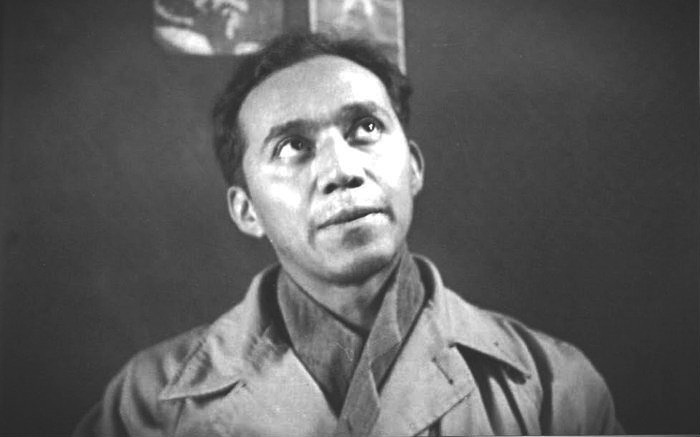
A Ford drives at a snail's pace through a working-class neighborhood in Mexico City. It seems to be searching, waiting, on the hunt. It's almost midnight on August 15, 1942. The car turns on its headlights. From the darkness emerges the silhouette of a very young girl. The next day, the newspapers reported that she was 16 years old., whose name was María de los Ángeles González and who worked as a prostitute. The autopsy revealed that she had been strangled with a shoelace. All of Mexico knew the killer's identity, but some time later, when Gregorio Cárdenas Hernández had already become a notorious serial killer, when he was already known as “Goyo Cárdenas, the Tacuba strangler.”.
“Goyo” Cárdenas only needed 18 days in 1942 to ascend to the criminal olympus of Mexico. From August 15 to September 2, he murdered four women. He raped them all first, then strangled them and buried them in the backyard of his Tacuba neighborhood. He made an exception for the last one. He said he was in love. He raped her after she was dead.
The doctors who tried to explain his behavior pointed out that Cárdenas suffered from neurological deterioration since childhood, as a result of a blow to the head. Others claimed that he suffered from a genetic disease inherited from his father, which caused him to lose his mind. However, the young "Goyo" never had any problems studying -although he never finished- at the Faculty of Chemical Sciences and standing out as an outstanding student. His reputation as a promising young talent paved his way to the offices of PEMEX, the powerful Mexican oil company. In his free time, the 27-year-old enjoyed life, painting and playing the piano. It was in this quiet, sedentary life that "Goyo" found himself when, on the night of August 15th, he went out to kill prostitutes in Mexico City.
August 15. The first victim, María de los Ángeles González, was waiting alone for her next customer. “Goyo” stopped the car at her feet. “My name is Bertha,”, She introduced herself. He told her to get in his Ford and drove her home. They had sex all night. At one point, “Bertha” turned her back on him and went to the bathroom. “Goyo” jumped up and caught her by the neck with his shoelaces. The girl died of asphyxiation. He buried her in the small garden at the back, in a pit no more than 1 meter deep.
August 23. Raquel Martínez León worked the streets in the same area as “Bertha,” but she was two years younger. At night, as various cars illuminated her, she saw “Goyo’s” Ford stop. The killer repeated the methodology. He took her to his house, they had sex, and he waited for the moment she was most distracted to attack her. Little Raquel was browsing a book when she felt the clamp of the shoelaces on her neck. “Goyo” dug another hole in the garden and buried her. When news of the crimes spread, a strange version emerged. It claimed that the real Raquel was alive and had appeared at the family home after hearing that her brother had died upon learning of the murder. Investigators never pursued this lead further.
August 29. Rosa Reyes Quiroz was also a minor and a prostitute when she entered the house of the murderer Cárdenas. Detectives were able to reconstruct the minutes leading up to the attack and determined that upon entering, Rosa would have suspected that something was wrong. She tried to escape and began to struggle. The strangler, who was no more than 5'8", managed to restrain her tightly, raped her, and strangled her with the same cord. He hid her body in the garden soil.
September 2nd. “Goyo” met Graciela Arias Ávalos, 21, because she was also studying Chemical Sciences. He was smitten with her the moment he saw her. Stubborn, he asked her out several times, while she remained on the fringes of friendship. Until one day “Gracielita” agreed. He picked her up at her house, and as soon as he got in, he declared his love. Amid the girl's shock, "Goyo" seized the opportunity presented by his newfound courage and went for a kiss. But she didn't want it. He persisted. She didn't want it. He insisted more and more forcefully, until she slapped him. In a fit of rage, “Goyo” ripped off the door handle and smashed it over her head until she was dead. She was the last one he buried in that macabre and improvised home cemetery in the Tacuba neighborhood.
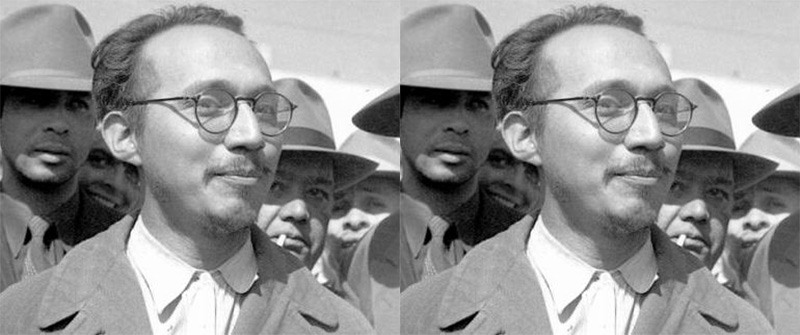
Gracielita's father was a renowned lawyer in Mexico City. When he saw that his daughter did not return, he launched an exhaustive search through the deputy head of the secret service, Simón Estrada. “Goyo” had admitted himself to the Dr. Onero Barenque Psychiatric Hospital on September 7. The next day he saw the spy arrive with other police officers. They didn't have to investigate much. He immediately confessed that he had killed Graciela and buried her in his house. But he said nothing about the others. They were found after the soil in the small garden was disturbed. As he watched his dead bodies resurface, Gregorio Cárdenas asked the police for a typewriter and wrote his confession.
“Monster makes brutal confession”, "The headline on a newspaper's front page...". “"Jackal"”, others said. The press had a field day with Cárdenas's story, who had suddenly become a macabre celebrity. And he would continue to be one.
After passing through several psychiatric hospitals and a prison, “Goyo” managed to escape in 1947. Although only for a short time. “I didn’t run away, I just went on vacation,”, He explained this to the prison guards when they recaptured him in Oaxaca, 20 days after he escaped. He was imprisoned for 32 years in Lecumberri prison and two more in La Castañeda. During those years he published the magazine Lecumberri, and wrote five books: Cell 16, Ward of the Mad, A Turbulent Mind, Goodbye to Lecumberri y Concentration camp.
When he wasn't writing or painting, he spent his time playing Bach, Mozart and Brahms on a piano that his mother had given him. Through self-study, he accumulated a great erudition in Criminal Law and Psychology. He married Gerarda Valdéz - a friend of his mother who accompanied her on visits - and had four children.
In 1976, at the request of his family and after spending 34 years in prison, the president of Mexico, Luis Echeverría, granted him a pardon. Gregorio Cárdenas, now 61 years old and with his freedom guaranteed, was summoned by Congress to be congratulated for being “an example for Mexicans” and a “a clear case of rehabilitation.”.
From that moment on, Cárdenas's figure became a strange fascination for musicians, filmmakers, and other artists and scientists. Alejandro Jodorowsky made the film Holy Blood based on your case. Plays were staged about his murders, in which "Goyo" himself corrected details of the crimes. Songs and poems were dedicated to him. He had his own radio drama and cult film, and exhibited his paintings in several galleries. Dozens of books have been written about his life; some in the form of chronicles, others with scientific pretensions. Mexican criminologists still discuss the matter in universities.
Once free, he finished his law degree and handled some cases in his private practice until he traveled - no one knows exactly the year or the circumstances - to Los Angeles, United States, where he died in 1999. Before leaving, he said in an interview: “I was examined by about 48 or 50 doctors. Some indicated schizophrenia, others psychopathy, others different types of epilepsy, others profound mental weakness. Others, paranoia. Yes, of course.».
He was born in 1915, in Mexico City. He died a free man.