
By Ntd.la Staff
(Editor's Note: You might find our decision crazy, but we've published this article from the wonderful archives of our friends at Ntd.la to get into the Halloween spirit. Talking about pirates, among other things, makes us think of one of the most traditional Halloween costumes, a fact evident in the number of children dressed as these dangerous seafaring characters who invaded our Caribbean centuries ago, as well as in the late-night celebrations of adults who, after a few drinks, start rolling their mouths with the letter R in their speeches, trying to be funny. Anyway, we've got a rather interesting story for the occasion that's worth remembering. To top it all off, the article's soundtrack features a dozen songs, with ska, metal, hip hop, and cumbia sounds, to give us a good laugh, as it should be.).
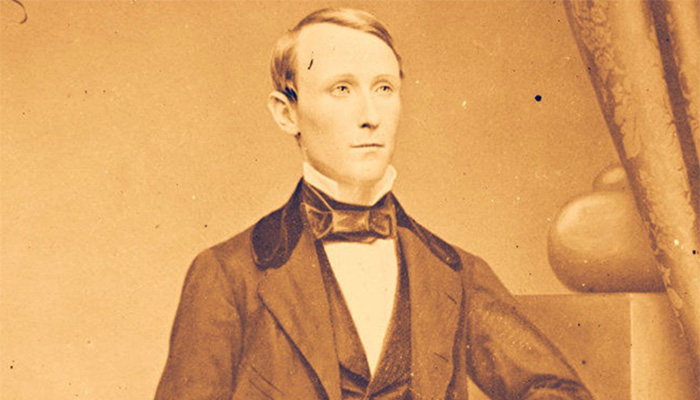
William Walker was the most famous filibuster in the world and probably the one who went the furthest. He was born in 1824 in Tennessee, United States, into a wealthy family who expected him to become a priest. But Walker explored other paths, despite being a doctor, lawyer, and journalist. He decided to travel through Europe. Upon his return, he began what would become the story of his life: those adventures that would lead him to become president twice.
The Gold Rush gripped the United States in the mid-19th century, urging people to travel to the most distant and dangerous territory in the country: the Wild West. William Walker, in addition to the fever, was also consumed by an almost religious doctrine: Manifest Destiny. The United States, a nation destined to expand from the Atlantic coast to the Pacific. Walker believed that Americans were the bearers of progress. Of course, this idea wasn't very popular, especially with those who would ultimately benefit from this supposed progress, and that's why, then as now, there were men, women, and companies dedicated to promoting this idea. Back then, they were the filibusters, and William Walker was one of them. A man who, without the formal backing of any state, assembled a small army in the 19th century in the Antilles and embarked on a conquest.
The year was 1853 and Walker was 29 years old and had 45 men under his command. Their mission was to land in Baja California, Mexico, and proclaim the Republic. He did just that, arresting some of the authorities and proclaiming the Republic of Baja California and Sonora. The charade lasted a mere four months. He was attacked from all sides and had no choice but to flee to the border and surrender to the authorities. Politics did not help Walker. While he was performing his heroic act, the Mexican government was signing the sale of a strip of the border to the United States. Thus, the most famous filibuster was tried by the American authorities. And, of course, acquitted.
A few peaceful years led Walker to practice journalism in the United States, but it all ended when an editor told him about Nicaragua. The conditions seemed ideal. The gold rush demanded a passage linking the Pacific and Atlantic Oceans, and Lake Nicaragua was the perfect option. Meanwhile, a civil war was raging in Nicaragua, and one of its factions was requesting aid from the United States. Walker then gathered 58 men and after much gunpowder, triumphantly entered the city of Granada. He was first appointed colonel, then head of the Army, and in June 1856 he ran for election. In a turbulent day, Walker crushed his opponent and became president of a Republic for the second time.
His first act as president was to declare English the official language. and to reinstate slavery in order to incorporate Nicaragua into the United States as just another slave state, and thus help to alter the internal balance in favor of the Confederate States. But the scenario was adverse. Already at war with Costa Rica, Honduras, El Salvador and Guatemala, who did not recognize Walker, He had no choice but to surrender on May 1, 1857 to American troops. He then returned to the United States on a U.S. Navy ship. He was tried again in the United States and pardoned once more. But Walker would return to Nicaragua, perhaps confident in his manifest destiny, accompanied by 270 men aboard the ship Fashion. This time the failure was resounding, and he had to surrender again to the United States, which once more pardoned him.
But Walker was a stubborn man. That is how he decided to return for the third time to Nicaraguan soil in 1860 with a troop of about one hundred men. His plan was to reach Honduras and travel south to Nicaragua. But the Hondurans nipped at his heels until they had him cornered. Suffering from yellow fever, he was captured on September 3rd. They demanded his surrender, but Walker refused until he was certain it was before an Englishman. Once he surrendered, William Walker was handed over to the Honduran authorities who, Finally, on September 12, 1860, in Trujillo, Honduras, he was executed by firing squad.