By the Zonagirante.com team @spinning zone
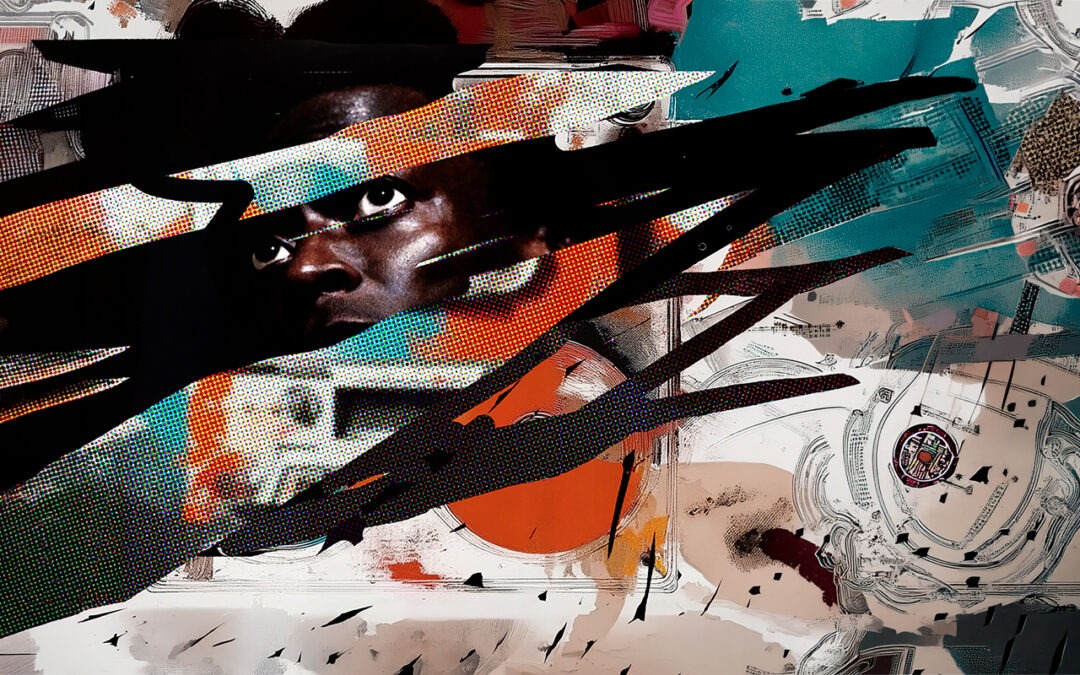
Cover art by Zonagirante Studio
Editor's note:
Before talking about Miles Davis and Teo Macero, a confession: sampling changed the way we create at Zonagirante.com.
For years we thought that "creating" meant making something from scratch. A blank page. An empty canvas. Absolute silence as the starting point. But that's a lie. Nobody creates like that. We are all samplers.
Sampling is recognizing that culture is conversation. That we have the right to reinterpret, deconstruct, and adapt what others have done before us. To take what exists and say: "This can be something else. In my hands, it tells a different story."«
Purists will say it's cheating. That we should make our own music, our own image, our own "original" work. As if there were anything pure. As if Mozart hadn't studied Bach. As if Picasso hadn't reinterpreted Velázquez. As if every creator were not, at heart, a sampler of their tradition.
Sampling is not a lack of creativity. On the contrary, it's honesty about how creativity works.
It's not theft. Rather, it's a conversation with the past.
It is not the end of authorship.
Rather, it is its democratization.
Y That, for some, is unforgivable.
This article is a defense of that practice. Of sound sampling. Indeed, of those of us who create by reorganizing what already exists. Of those of us who don't ask permission to reimagine the world.
It begins with Miles Davis in 1969. But I could start with any creator who understood that everything is a remix.
The day Miles invented the future
February 18, 1969. CBS 30th Street Studio, New York. Miles Davis He records for three hours with musicians who barely know each other. One of them, John McLaughlin, He was invited the day before. There are no written scores. In fact, Miles conducts with minimal cues.
Those three hours produce 40 reels of magnetic tape. Teo Macero, The producer spends weeks cutting them with a razor blade, rearranging fragments, creating loops, splicing sections that were never played together.
The result: In a Silent Way, 38 minutes of music built in the editing.
Miles Davis had just invented sampling. Two decades before DJ Kool Herc isolated the break from «"Apache"» in the Bronx.
The difference isn't technical. It's conceptual. Macero didn't document a jazz session. He built an album in the studio, like a filmmaker edits a film.
The original jams were source material. The work was in the edition.
As Macero would say years later:
«"We didn't record music. We manufactured it."»
What is the sampling?
Sampling It's about taking fragments of existing recordings and rearranging them to create something new. Like a collage, but with sound.
DJ Shadow building Endtroducing from rare vinyl records. J Dilla cutting two seconds of Dionne Warwick to make a beat. The Avalanches using 3,500 samples in Since I Left You. Everyone does the same thing as Macero: reorganize what already exists.
The paradox of sampling is that it creates originality from what is borrowed. It's not copying—it's composing with other people's material. The art isn't in playing the notes. It's in deciding which notes, from where, in what order, and with what processing.
It is curation as creation. Editing as authorship.
And although hip-hop popularized it in the 80s, sampling has a longer history.
Before the Bronx: The Prehistory of Sampling
Musique concrète (1940s-50s)
Pierre Schaeffer He recorded everyday sounds in Paris: trains, voices, metallic objects. He cut them onto magnetic tape. He rearranged them into new compositions. Étude aux chemins de fer (1948) is a piece made entirely with train sounds.
Schaeffer called this "concrete music". We would call it sampling.
The Beatles and George Martin (1960s)
Sgt. Pepper's Lonely Hearts Club Band (1967) is full of tape loops, cut fragments, altered speeds.«Tomorrow Never Knows»"It uses seagull loops, Tibetan bells, and accelerated laughter. All cut, rearranged, spliced together.".
George Martin He worked as Macero would work: the study as an instrument. Editing as composition.
Miles Davis and Teo Macero (1969)
In a Silent Way He takes this further. Macero takes 40 reels of jams. He cuts them with a razor blade. He rearranges them following a classic sonata form: exposition, development, recapitulation. He creates loops manually. He splices sections recorded hours apart as if they were continuous.
The piece «Shhh/Peaceful»"It lasts 18 minutes. But it's not an 18-minute jam.". It is the construction of fragments. It's proto-sampling.
And Macero repeated it in Bitches Brew (1970), On the Corner (1972), Get Up with It (1974). Each album more radical than the last.
Each album more radical than the last, more cut, more rearranged, and deliberately manufactured.
The jazz community hated him. They said Miles had betrayed improvisation, the moment, authenticity. That he was now making "studio music" instead of real jazz. They were right.
And that was exactly the point.
The explosion: hip-hop and the democratization of sampling
DJ Kool Herc (1973)
In the Bronx, Clive Campbell—DJ Kool Herc—discover something simple: dancers prefer pure drum sections.
The breaks.
Use two copies of the same vinyl record. When the break on one ends, switch to the other. Extend 15 seconds of drums in endless loops. The MCs rap over them.
It's live sampling. Manual. No tape cutting—just two turntables and perfect timing.
Grandmaster Flash (late 70s)
Flash perfects "punch phrasing": cutting exact fragments of vinyl records and inserting them in real time. Not just loops—samples of one second, half a second, fractions of a second.
It's technical virtuosity. A live editing performance.
Akai MPC and E-mu SP-1200 (1980s)
Then came digital samplers. You no longer needed two copies of the vinyl. You no longer needed to cut tape. You recorded any sound. You cut it. You rearrange it.
The sequences.
Total democratization.
Public Enemy Sample 20 sources in a single track. The Bomb Squad builds walls of sound from fragments of James Brown, Funkadelic, news reports, sirens. DJ Shadow spends years in record stores searching for rare samples for Endtroducing (1996)—an entire album made of other people's fragments.
Later, The Avalanches take it to the extreme: Since I Left You (2000) uses approximately 3,500 samples. It is a massive collage.
Masterpiece of curatorial work.
Drum & bass and the Amen Break (1990s)
The most extreme case of sampling is probably the Amen Break: six seconds of drums from the track «"Amen, Brother"» (1969) of The Winstons.
Those six seconds became the foundation of drum & bass.
Therefore, producers sample them, cut them into quarter-second fragments, rearrange them at 170 BPM, and process them until they are unrecognizable.
One sample. Thousands of songs. Entire genre.
It's the same process as Macero: taking existing footage and creating something new in editing. The difference is that Macero had 40 reels. Goldie had six seconds.
The controversy: art or theft?
Sampling has always been controversial.
Arguments against:
«"It's stealing other people's work."»
«"It's not real creativity, it's parasitism."»
«"True musicians play instruments"»
The arguments in favor:
«It is a composition using existing material.»
«"Andy Warhol did the same thing with images."»
«"It requires a unique curatorial ear"»
The controversy became legal in 1991: Biz Markie samples «Alone Again»"by Gilbert O'Sullivan without permission. O'Sullivan sues. He wins. The judge rules that unauthorized sampling is copyright infringement.".
As a result, sample clearance has become an industry. Some samples cost more than producing the entire track. Many classic albums from the '90s couldn't be made today—they're too expensive.
However, the practice continues. It just becomes more expensive. Or more clandestine.
Because the reality is simple: sampling is no more "theft" than Picasso's collage or Duchamp's readymade. It's creative reorganization. Art has always been a conversation with what exists.
The difference is that when Picasso reinterpreted Velázquez, nobody charged him royalties.
From sound to image: sampling is ubiquitous
What Macero did with magnetic tape in 1969, designers do today with Photoshop and generative AI.
The process is identical:
Collect material (samples, images, elements)
Cut and isolate fragments
Reorganize into new composition
Process (effects, filters, adjustments)
We don't call DJ Shadow a "thief" for sampling vinyl. We don't call Macero a "cheater" for cutting tape.
Why would we call a designer who samples with AI a different name?
The tool has changed. The process is the same.
And the ethical question also arises: Where does influence end and theft begin? Where does reinterpretation end and copying begin?
There is no easy answer. There is only practice. And defending that practice.
Coda: Back to Miles
When Miles Davis died in 1991, hip-hop had already turned sampling into a universal language. But Miles had been there first, cutting tape with Macero in 1969.
The lesson isn't who did it first. It's that sampling—reorganizing what exists to create something new—is a fundamental human impulse.
It's not theft. It's conversation.
It's not parasitism. It's recontextualization.
It is not the end of creativity. It is its continuation through other means.
As Teo Macero said: "We didn't document. We built."«
That's the difference between recording and sampling. Between capturing and composing. Between playing and creating.
Sampling recognizes that everything is material. That culture is a breeding ground. That we have the right to excavate, cut, and reorganize.
Miles knew it in 1969.
Kool Herc found out in 1973.
DJ Shadow knew it in 1996.
And today, anyone with an MPC, a digital sampler, or a computer can find out too.
As a result, the question isn't whether you're going to sample. The question is:
What are you going to do with the fragments?
Ps. In the next installment: how visual sampling has a 100-year history, from Hannah Höch to generative artificial intelligence. Because this didn't start with Photoshop. It started with scissors and glue in 1919.