

By the Zonagirante.com team @spinning zone
Cindy Guitars archive photos
Editor's Note
There are some people who stay with us. Not because they're persistent, but because they're honest. Cindy Hulej is one of they.
For a while, we read his interviews leisurely, almost like someone revisiting a familiar song. Each piece revealed something more: his understanding of the craft, his relationship with wood, his way of experiencing time. Without realizing it, it became a minor obsession.
In a fast-paced and noisy world, Cindy represents something else entirely. Patience, craftsmanship, consistency. A woman who makes guitars from reclaimed wood, who listens before building, and who understands making as a way of life.
After reading several articles about her, we felt it was worthwhile to stop and share this story. Not as a technical profile or a comprehensive biography, but as a weekend reading. The kind that are enjoyed without haste and that linger in your mind.
What follows stems from that.
There are places where music doesn't begin with a note, but with an old board leaning against a wall. Carmine Street Guitars, In a small workshop in Greenwich Village, New York, the guitars don't come off an assembly line, but rather from a constant dialogue between hands, ear, and memory. That's where he works. Cindy Hulej, luthier and visual artist, building instruments that are, above all, objects with a history.
Cindy didn't come to this profession by following a manual. She came out of curiosity, intuition, and a very specific need to do something meaningful. When she first appeared at the workshop of Rick Kelly, a master luthier associated with names like Lou Reed and Patti Smith, she wasn't looking for fame or a fast-track career. She was looking to learn. Even though there was no money involved at first, she decided to stay. Learning a craft from the ground up, with patience, was her choice.
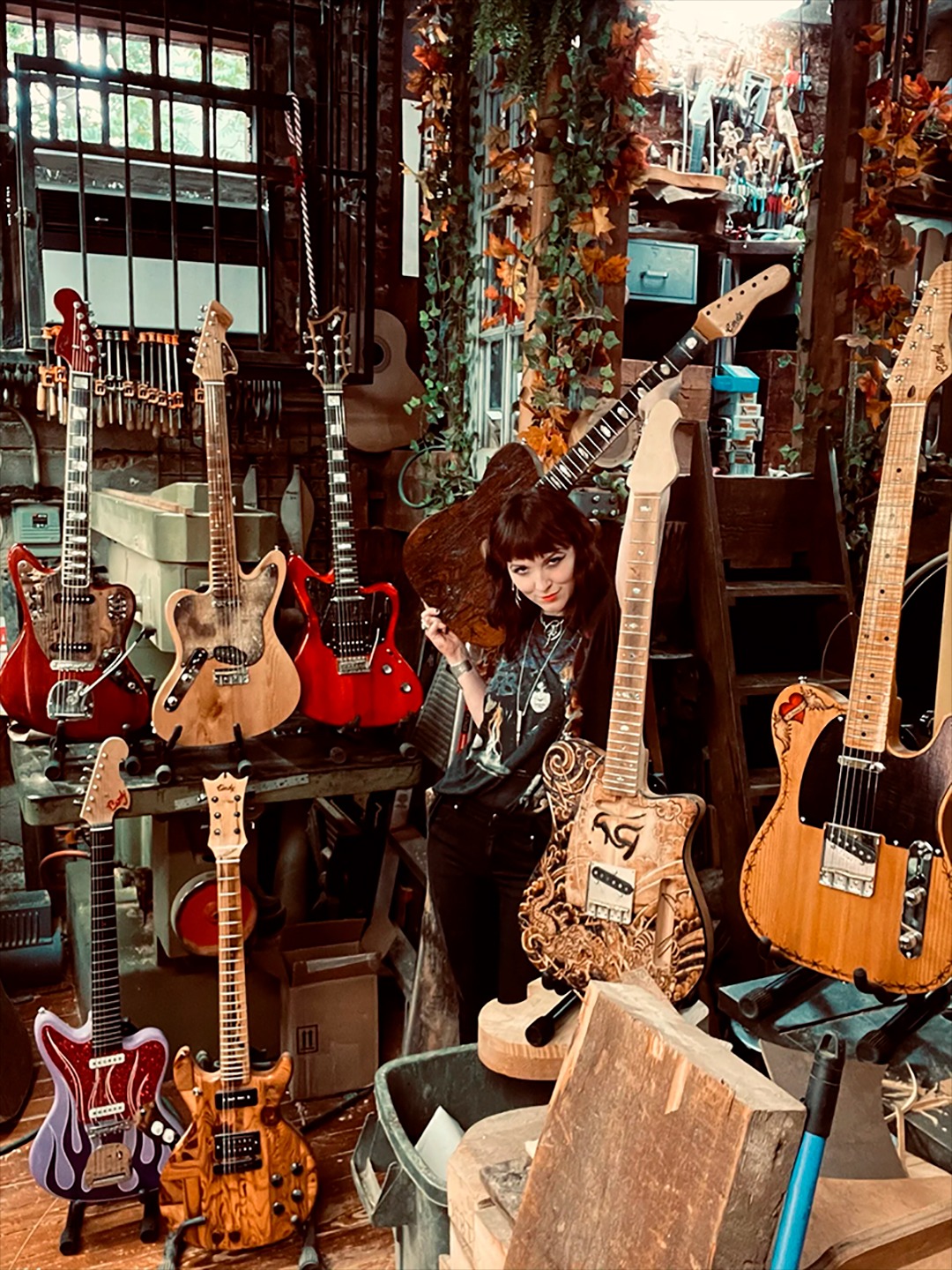
That patience permeates all her work. The guitars Cindy builds don't start with new or perfectly cut wood, but with... reclaimed wood from old buildings in New York. Hotels, bars, churches, demolished houses. Materials that have already had a previous life and now find another way to resonate. Each board is inspected by hand, cleaned of nails, carefully examined. Nothing is forced. The wood tells how far it can go.
There's something profoundly poetic about the idea of guitars with three lives: first as part of a building, then as urban waste, and finally as a musical instrument. The old pine that Cindy uses, hardened by decades of temperature and humidity changes, has a special resonance. It's not just a matter of sound; it's a matter of accumulated time.
Her guitars don't strive for industrial perfection. On the contrary. Knots, irregular grain, and small imperfections are part of the instrument's character. Each piece is different because the material is unique. Cindy repeats certain designs, but never identically. There's always a new decision, an adaptation, a careful listening to what that particular wood is asking for.
Beyond the technical aspects, what is truly inspiring about his work is the vital stance that sustains it. Cindy doesn't see her craft as a product or a career that must climb relentlessly. Building guitars is, for her, a way of being in the world. Of working with her hands, of respecting slow processes, of finding joy in doing something small and concrete well.
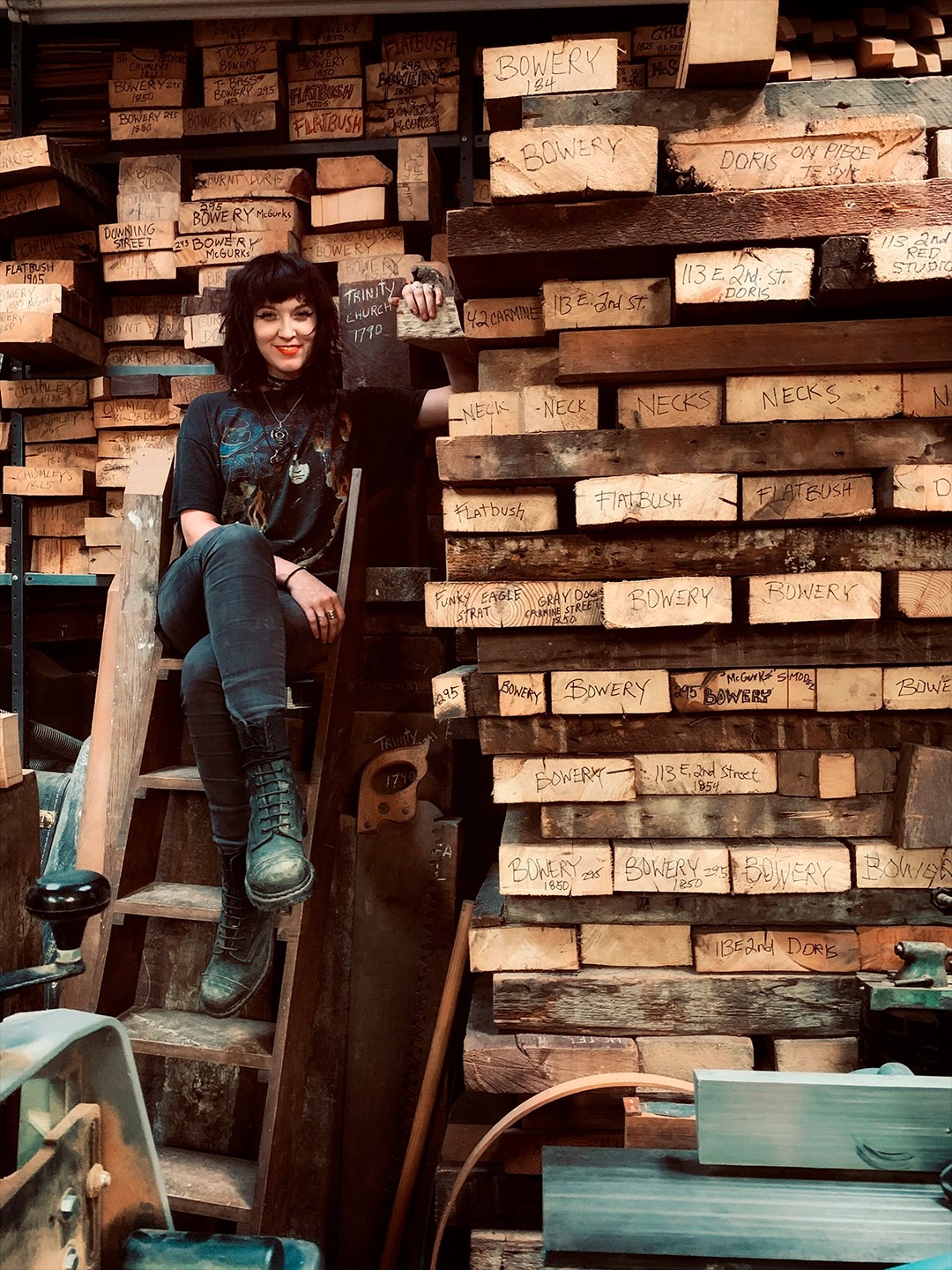
That way of experiencing the profession was also recorded in the documentary Carmine Street Guitars, where you can see the day-to-day life of the workshop, the conversations with musicians, the physical weight of the wood carried on the shoulder and the intimacy of a space where time seems to move differently.
In a field historically dominated by men, Cindy has never made her gender a loud statement. She prefers to let her guitars do the talking. And they do. Not as luxury items, but as instruments with soul, meant to be played, used, and experienced.
Perhaps that's why her story resonates even with those who don't play guitar. Because it speaks to something broader: choosing the long road, trusting in the craft, finding meaning in what is handmade. In times of extreme speed, the existence of people like Cindy Hulej serves almost as a silent reminder that another relationship with work, with time, and with creation is still possible.
And that, for us, is music enough.