
By José Gandue @Gandour
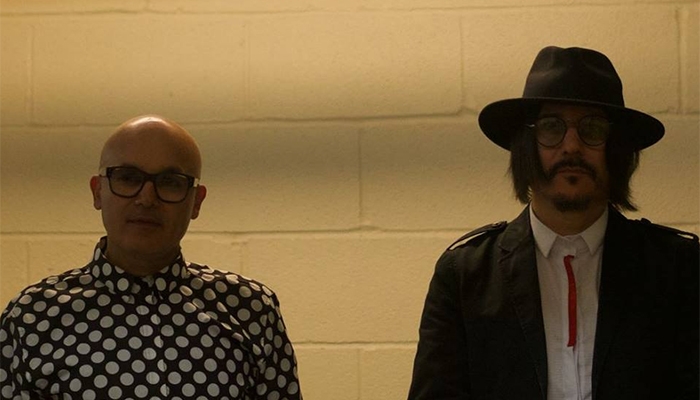
First, a fond memory. The year is 2002, downtown Bogotá. The first Electronic Encounter of the Jorge Elícer Gaitán Theater is being held, an interesting experimental festival that took place three times at the beginning of the century. That year, on its final day, All the members of an artistic group that came from Tijuana take to the stage, To be honest, at that time, only a group of specialized nerds knew about him and had been able to listen to some of his recordings, included on his album Tijuana Sessions Vol. 1, mostly pirated copies. However, the buzz about the show they could put on had already taken hold, and the hall was completely full. The previous year, some of these musicians They had been at the electronic music night sponsored by the Mexican embassy, at the seventh edition of Rock al Parque They had already showcased their musical style, a fusion of techno with norteño rhythms, but what happened at Gaitán was magical. Everyone danced from beginning to end and celebrated every sonic and visual moment the Mexicans presented. That was one of the best concerts I've ever seen.. Since then, to Bostich + Fusible (that is, Ramón Amezcua and Pepe Mogt, respectively), founders of the Nortec collective, We have seen them, in the midst of their extensive world tours, stopping in Bogotá for two additional editions of Rock al Parque, at the defunct Almax festival, and at several private parties and concerts, summoning followers until the flags.
Twenty years have passed since they had The idea of creating a fusion at that unexpected time turned electronic music around in Latin America. To mark this anniversary, their greatest hits album has been released on digital platforms, and for specialized collectors, a special vinyl pressing has been made available. For all these reasons, we contacted them just as they were about to board a plane at the Cancún airport., to talk about history, present and future. It was a disorganized, funny, somewhat chaotic interview, which we hope the edited version will help us understand better. Pepe did most of the talking, but Ramón chimed in a couple of times to round out the conversation.
Let's go back twenty years: How did you come up with the idea of mixing electronic and norteño music?
Pepe Mogt: This idea came to me almost after I'd been working as an electronic musician for a while. I started in 1989 playing in a concert bar in Tijuana with a more industrial sound: noise, EBM. From then until 1999 (10 years), I went through house, techno, and breakbeats. I already had four albums under my belt: three with Artefakto and one with Fussible, and I'd participated in many national and international compilations, specifically in countries like the United States, Brazil, and Germany. In 1998-1999, I became completely fed up with what I was doing. I felt like I was just imitating my first foreign heroes, since I didn't have any national ones, because they were doing the same thing: imitating what was happening abroad. It also never crossed my mind to look for regional sounds and create something... Mexican Curious Music Nor anything kitschy. However, I wondered what would happen if I mixed music I didn't like and recycled it to make music I did like. I even considered deconstructing music from musical aberrations like Timbiriche, Luis Miguel, Cepillín—anything that was manufactured music. Seeing that I'd have problems with sampling, I found a friend who had tapes of local groups recording Norteña and Banda, which I also didn't like, and it seemed to me that there might be something there. I got hold of them and experimented with them, just as a personal experiment, nothing more.
The first topic was Fan, It was very ambient, like some techno made with accordions and processed norteño vocals, and it sounded like everything but that kind of music. It was so processed that it was hard to tell where it came from. That excited me so much that I thought I could put together a compilation with friends, but only that. The first one to arrive was Bostich, who laughed at me when I told him I had these norteño sounds at home and thought I was pulling his leg (even though he didn't have any by then). I burned him a CD with the original sounds and he saw that I was serious. I think he felt that same need to find something. Three days later he came back with Polaris. He did the opposite of what I did: He left the original sounds. silk,and cut them as if he were drum&bass. It blew my mind personally. With the themes Trip To Ensenada, Fan, Polaris and Synthakon was born
Nortec Sound.
It was Ramón, me, and Melo (at that time he was part of Fussible and was the first dissident from Nortec). Melo, very affectionately, told us: «"I hate the northern style and that idea of mixing what you and Ramón are doing, but I'm going to support you."». The truth is, she integrated herself into the musical aspect, complaining but also loving the project. So we decided to do Milrecords (the label that initially released the collective's music) among the three of us. Then, we put out a call for submissions for the project, with regional electronic music projects. That's how the others joined. Musicians with national and regional experience told us to get lost with this idea because they considered it naca, And only close friends who knew little about electronic music production and composition ended up working with us (except for Fernando Corona, Terrestre). I was very disappointed that more than half the people I knew who made music turned their backs on us. So, I took charge of Panóptica, Hiperboreal, and Clorofila, while I put Plankton (a good musician, but he needed guidance with the electronic side) in charge of Fernando, and together we put together the Nortec Sampler. That sparked the Nortec explosion.
Was the result produced the expected outcome?
Yes, absolutely. Panóptica gave me a sampler of El Chavo del Ocho and a güiro loop, and I ended up composing and producing it. And L, which I still like to this day (by the way, I didn't use anything he gave me, just a snare drum). The others got involved with ideas, and I also brought them into the studio to develop them. There were some really good times. Besides, there was a great camaraderie. Almost like a gang wrapped up in the bohemian lifestyle. I think that for those who saw Nortec from the outside, the fact of seeing so many projects with their own unique and diverse (collective) sound was striking. Those were days of creative seclusion.
Okay, the sound is born, and then, how does everything else fit together?
We gave several local presentations, but the electronic music community turned its back on us. However, the art community was fascinated by the project, and that's how graphic designers and visual artists became involved.
How did that visual concept develop? Did you have any input on it?
Yes, of course, Clorofila (Fritz Torres and Jorge Verdin) are designers with a long career and served as curators of the guest artists and were largely responsible for the visual aspect of Nortec.
I remember you once told me that the live experience you had at the Electronic Festival here at the Gaitán Theater was vital to consolidating the whole package, right?
There was an incredible connection between us and the audience at that gig; it was very moving for us.
But it was also like the moment when the union of music and image began to work as they had hoped, wasn't it?
Exactly, we were just premiering it.
At what point do you feel that Nortec is functioning internationally?
(Ramón interjects): Since the album came out Tijuana Sessions Vol. 1, We received many reviews from international press outlets such as the New York Times, Newsweek, Wire, among many others, and we were able to participate in international festivals such as Coachella (USA), Sonar (Spain), Royal Festival Hall (London), among others.
You put Tijuana in the public eye for reasons other than political and social ones, are you aware of that?
I think there's some truth to that, to the border, to a city drowning in drug-related violence. What stood out was the collective approach and the very local sound.
Furthermore, you charted a new course for Latin American electronic music. Although there were experiments in fusing indigenous rhythms, you proved that this could work and strengthen an identity. Do you feel recognized for that?
These fusions already existed, even in the early 80s with Yello and many others. Nortec's charisma back then lay in the vibrant music and visuals, as it represented the Tijuana we were living in and a generation that was looking to express itself.
How has the Nortec sound evolved in twenty years?
There have been several stages. The first was very rudimentary. For the Tijuana Sessions Vol 3, A tour with the whole group was decided upon, and we traveled together for a couple of years. When we were working on our fourth album, each member had different goals in music, and so we decided to play separately. That's when Bostich and I decided it was necessary to put together a small band of musicians and use current technology for the album. Tijuana Sound Machine, which refreshed the Nortec sound as it was known up to that point. New technologies and the creation of a conceptual trilogy evolved the sound and the way it was presented live. The inclusion of musicians gave the performance a new freshness; the difference was palpable. And above all, the musicians intervened with solos, like, well, a rock guitarist. Each one had their part. Even Fresa Salvaje, the bass player, would have his bass unplugged, but he'd keep playing and dancing or throwing the bajo sexto around like he was Sid Vicious but dressed as Woody Allen.
After twenty years, the Nortec label is now just the two of you. How do you feel about that?
In 2006-7 everyone had very different goals and vision, and Ramón and I continued with the same enthusiasm as at the beginning, adding 3 more albums and a collaboration with Cirque du Soleil.
And now, what comes after this Greatest Hits album?
Well, I live off what Nortec left me. I think I should go live in Medellín for the rest of my days, keeping a low profile and silky, doing ambient stuff. (Ramón chimes in again): I'm continuing with my side projects as Ramón Amezcua, and we're still producing electronic music together.
So, is Nortec over?
For now, let's just say it ended after the Cirque du Soleil Luzia. But he's mostly resting. Maybe we'll get together tomorrow to do Nortec. There's no 20th anniversary tour or anything like that. We do play together, but for now it's just things we enjoy with our solo projects.