By José Gandue @Gandour Cienfue archive photos
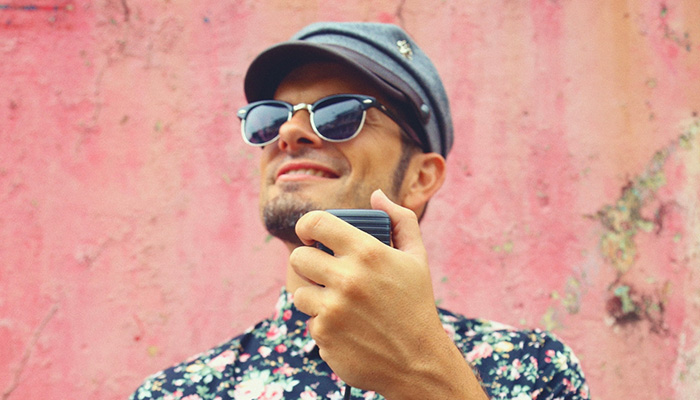
Surely Camilo Navarro, better known as Cienfue, He misses the old days of MTV Latino, when it was still a music channel that showcased much of the music produced in this continent and constantly played his videos—clips that were amazing for the time, and which allowed many of us viewers to discover the talent of this Panamanian artist. Back then, we were also struck by the fact that his country, which we associated with legends like Ruben Blades, Los Rabanes, or El General, I had someone moving around the alternative scene, having, through good audiovisual pieces, a significant impact on the scene. His first albums, The record is culture and then, Macho de Monte Suite, We could define them as a fusion of blues rock with a Caribbean flavor, where the distortion of the instruments and the vocal sound experimentation set an interesting precedent, since it was not easy material to digest or program on typical commercial radio stations, However, some of the hemisphere's major festivals and the most prestigious alternative media outlets were keeping a close eye on him. Almost fifteen years later, having already completed 5 full-length albums and several singles circulating around, Cienfue has his new production ready, Life in the Tropics, which will be released in April on the most popular digital platforms, but, as a preview, has been premiered in its entirety on Bandcamp. His latest work shifts in its resonance, Since it moves away from the rock soundscapes of before, and delves into electronic textures, doing what we could describe as a kind of house guitar player of burning earth, Wrapped in festive experimentation, which encourages dancing rather than shouting, while still maintaining a refined approach to mixing each song. This production was recorded at Strange Weather, Brooklyn and mixed at Toy Factory Mexico by David Francis O'Gorman. The result, it must be said from the outset, is remarkable and fun.
Back in Panama, the artist speaks to us to explain, in a unique combination of Spanish and some Anglo-Saxon terms, how his life is going and how it has changed in recent times:
There's a clear evolution in your sound since your beginnings; it used to be rawer, now it's more sophisticated. How would you describe that process?
I started in 2006, emerging from the Spanish Rock movement, which had a lot of punk and raw rock influences, like Aterciopelados, Soda Stereo, and Robi Draco. Since then, I've matured and started listening to a lot of indie and modern sounds. I really like Arcade Fire, Bomba Estéreo, and that kind of vibe (I saw them live in Bogotá a year ago, together). Amazing!I used to vent a lot of my depression in topics like Alcoholic Medium But right now I'm focusing more on generating light, positive energy in the world. We call it Tropical Psychedelia.
How have you shaped that tropical psychedelia? How has your songwriting and production process changed?
Trying to channel the Amazonian jungle energy that emanates from our region into a positive force in the world. I've had very revelatory experiences with ayahuasca and other psychoactive substances that have greatly influenced the visual arts and sound.
Has ayahuasca changed your life?
Let's say it opens your eyes to a deeper reality of energy and spirituality that lies beneath the surface of our material reality. Part of the message of the ayahuasca shamans is based on the belief that ayahuasca is a spirit of the Amazon that seeks to change humanity's perception, encouraging us to better conserve and respect nature and live in harmony with life in the biosphere.
What do you think now about what you did years ago that gave you international recognition?
I love the whole journey we've had through Latin America and the world, festivals like Rock al Parque, Vive Latino, and others. We've met so many wonderful people thanks to these sound waves. We still play the old songs, and they fit perfectly with the new ones. I have over 80 tracks We already have originals. We'll soon be over 100.
Your relationship with video work is very particular. You're meticulous and detail-oriented with your clips. Why this obsession?
I love the visual aspect. Everything is visual. I have a close collaborator, Anel Reyes Saldaña, who works in videography. We create all the visual elements to accompany the live music and generate that mystical energy that we want to give you goosebumps. I'm also a painter and graphic designer, and I love everything visual. And, well, the trip Ayahuasca is also very visual and kaleidoscopic. Sometimes the artist's role is like that of a modern shaman who has mystical experiences and brings them to the sober audience.
Tell me about this latest album, Life in the Tropics, You did it entirely in English, was there a particular reason for that?
From childhood I've been bilingual, and many of my influences from English-language films and music, especially the music and vinyl record culture, are very much tied to English. So I wanted to explore that side of my artistic brain. Perhaps I also wanted to see how my music fit in with classic English-language artists. The night before the first single was released by Life in the Tropics In November 2019, I was so nervous about how the public would react to my English voice that I almost had a heart attack!
And what was the reaction that day?
Incredible! My audience has truly exploded with the English tracks. We've gone up from 20k monthly listeners on Spotify at almost 80,000. Right now and in January we hit 170k with the success of the single from On the back of your neck.
What's next in your career in the coming days?
We have live festivals in Panama this summer and we're releasing new singles. Then we'll release the full album. Life in the Tropics on vinyl.