By José Gandue @Gandour Atrato archive photos
We've always said it: Bogotá functions better on the days when the [event/event/etc.] takes place. Beautiful Noise festival. It's our favorite activity produced by Páramo, its creator company. It's the event where emerging local talent and Latin American guests come together and combine experiences., And the attending public comes with the desire to learn, to be surprised, to confirm that something is happening around here.
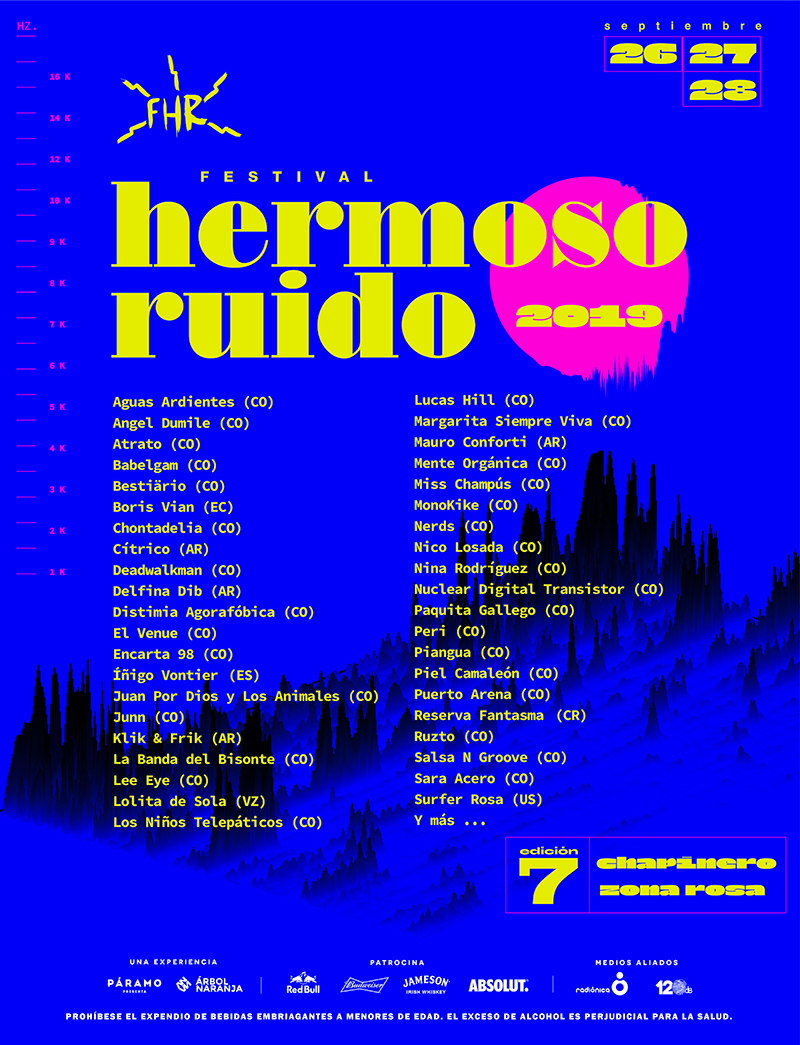
This year, in its seventh edition, to be held on September 26, 27 and 28, Artists from [locations] have already been confirmed Argentina, Ecuador, Costa Rica, Spain And, of course, Colombia. The sound is becoming increasingly eclectic and, dare we say, more rhythmic each day. To understand what will happen at Hermoso Ruido 2019, we contacted Laura Vásquez, We spoke with its new director to learn more about what will happen during those days, in different spaces in the capital's Chapinero and Zona Rosa districts. This was our conversation:
Now in its seventh edition, what is the Hermoso Ruido Festival all about?
Hermoso Ruido is the festival of new sounds. It's a platform that invites you to discover emerging talents, cultivate new audiences, believe in local culture, and listen to the sounds of the future. It's a space where new talents, audiences, and promoters from around the world converge.
What differences can be expected this time, compared to previous editions?
Each edition is different, and that's what makes this festival so charming. The talent showcased, the energy of the bands, the musical focus (while maintaining a clear curatorial line) is beginning to open up to new genres. And it's not just the music; the festival itself, in one way or another, takes ownership of the city. It invites the public to explore and discover new places and spaces dedicated to music.
What does Hermoso Ruido 2019 sound like?
It sounds like trap, indie, and Andean sounds mixed with electronica. It sounds like alternative rock, Colombian sounds, and it's starting to sound like reggaeton too.
I've seen that, in addition to performing at some of the usual bars in Chapinero and Zona Rosa, they'll have public stages. Please give me details about how the performances will be.
Last year we had a venue that we loved and will be repeating this year: Ruda, an open-air space next to El Virrey Park, with a program that starts at noon and is open to the general public. It's a unique venue, not only because it's during the day but also because it's free. This year it will be open on Saturday, September 28th, starting at noon.
How many groups are participating this year?
41. Artists from Colombia, Argentina, Ecuador, Costa Rica, Spain.
Stepping out of your role as festival director, if you were just an enthusiastic spectator, which bands on the lineup would you go see?
Burning Waters, Babelgam, Bestiärio, Delfina Dib, The Telepathic Children, Encarta 98, Citrus from Argentina, Piangua, Organic Mind, Ruzto.
What do you see in those bands in particular?
They represent the festival's diversity in terms of sounds, genres, and distinct fusions that undoubtedly enrich the festival. Each one presents a completely different show, but with incredible energy. I see bands with enormous potential for growth and a clear vision for their stage presence and music.
It all sounds great, but I have a question: Is it worth investing in this new, independent local talent? What do you hope will happen after the festival?
Of course it's worth it. These are the bands we hope will grow and become a dream for the public. If more spaces weren't opened up for emerging talent, it would be even harder for them to gain visibility in other spheres, for different audiences. The festival makes a great effort to bring not only bands from all over Latin America, but also promoters from around the world who are willing and interested in hearing what's emerging here. What we hope will happen is that the bands will grow, perform in other cities, other countries, and at festivals all over the world.