
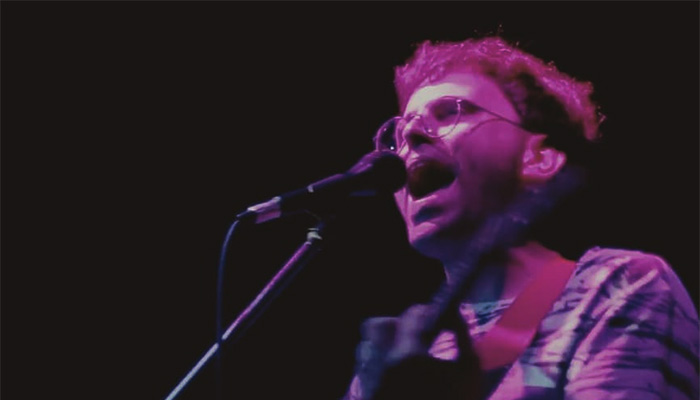
By José Gandue @Gandour Tototomás archive photos
Luckily, there are still people in this world making fun, quality music. Luckily, there are good guys like Tomás Casado, better known in the artistic world as Tototomás, who create songs that lift our spirits and convince us that the world, without resorting to sentimentality, has enough reasons not to abandon us. From the city of La Plata, Tototomás has been releasing great recordings that have received significant recognition from the specialized press and, in the process, has been gaining fans around the world., His music has been heard in the most unexpected corners of the world. After releasing his album Dubai (work we reviewed a few months ago)), immediately joined our project Castaways at home, opening the compilation with his song PO., one of the most listened to tracks in that sound collection. We've taken advantage of the leisure time afforded by the quarantine across the continent to have a more relaxed conversation with him:
For those who haven't heard Tototomás, how would you describe your musical project?
Tototomás might sound like a pop song with catchy melodies playing with Latin rhythms, to someone listening to it for the first time…
How do you construct your songs?
Many times they come from improvisations with just a classical guitar or with a backing track or sample with a good beat. Other songs, however, have a clearer and more direct message, and they come together in a very short time. Luckily, I find that "making" music opens up many possible paths.
Your work has a lot to do with combining analog and digital… What’s your trick for making the mix work?
I think that search is something you work on as you organically integrate new tools—like digital ones for me, whether websites, samplers, or computers—into your music. I believe it's primarily about prioritizing your own ideas and your own sound.
What are your role models? Do you have any idols in the world of music?
(Laughter) Luckily I had and still have several, from Bjork, BBK, the punk of my city La Plata, Meredith Monk, tropicalism, Colombian folklore like Petrona Martinez, etc.
I've always loved the great energy of your city, a beacon for Argentine music. How would you describe the music scene in La Plata?
The city, in a way, shapes the way music is made and experienced, permeating every one of its streets. Its university character has always made it vibrant and diverse. I believe it has been important in the emergence of rock, and especially indie music, particularly in the last decade or so.
Changing the subject, I'll ask you: how have you been handling the quarantine?
I think it's going pretty well, considering how the world has changed forever in such a short time. In my case, I started working remotely, which has given me much more time, so I think I'm lucky and I tried to make the most of it. With zonagirante.com, we released a quarantine compilation where I launched a new single, after having released a new album this year.
This has been on my mind lately, and I'd like to take this opportunity to ask you: Do you think that everything we're experiencing will change the way music is made in any way?
Well, it would affect us in some way. I think streaming and Instagram Live were the biggest tools for musicians during this time, and that makes us think a bit. On the other hand, I think shows and festivals will return sooner rather than later, with new protocols, we know, but there's something about that energy that's irreplaceable, at least for now.
With all this in mind, what does the future hold for you?
Although I'm in a holding pattern under quarantine, I still haven't released the new album I launched this year (DubaiSo that's a good starting point to begin playing when I can. I'll also be releasing new singles that I've been working on these past few months, as well as some other collaborations.