
By Alvin Schutmaat @alvinsch
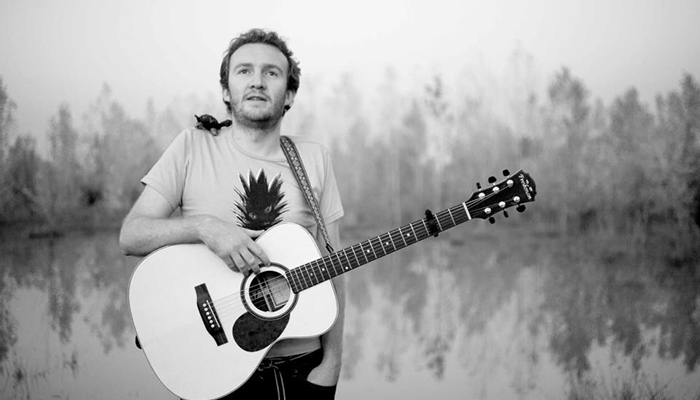
The Bogota artist Good day He recently released his new album This also happens in the Caribbean, whose title immediately announces an alternative proposal to what is commonly expected of tropical music with Caribbean rhythms. Featuring acoustic guitars, vocal harmonies, and subtle percussion, This album effectively transgresses everything we expect from music full of champeta, cumbia and other types of Afro-Colombian sounds; The fusion with aggressive electronic beats, synthesizers, and the raw sound we're so used to thanks to artists like Systema Solar and Bomba Estéreo are completely absent. This is more of an album for listening to around a bonfire on the beach than for dancing all night long.
Minimalist instrumentation focused on folk guitars, The sound, mixed with highly melodic vocals and often full of harmonies, can be compared to Bon Iver's first album. This kind of sophistication, when it clashes with frenetic champeta guitars, is a rather fortunate encounter of musical influences of all kinds, making it difficult to pigeonhole this album into a single genre, which is fabulous; Sometimes the most interesting music is the kind that's hard to classify.
This also happens in the Caribbean It begins in a calm and subtle way with From Within y High seas, which are songs that They make me think of Sigur Ros, but with Iceland replaced by the island of San Andrés. Then with Every Light, Gozá Gozá y I continue, The album shifts in speed and mood, becoming much faster and more upbeat, and certainly more champeta-esque; all this largely due to the participation of genre experts. Charles King—who is the famous Cartagena musician and author of The Pussy– sings in I continue, Mario Galeano of Frente Cumbiero and Los Pirañas plays bass. Franklin Montaño plays guitar and Juan Andrés Rodríguez plays drums.
Then, the album enters alternative indie territory with Change, which reminds me a bit of The Whitest Boy Alive melodies mixed with John Butler's guitars, but with beats that are on the edge of the border between acoustic and electronic. This territory, which abandons the Caribbean groove of the previous champeta songs, is maintained with the songs that follow, and Maria Mónica Gutiérrez, from Ságan, makes an appearance on the lead vocals of the song Like Air. The album ends with an instrumental piece of the same name as the album., which is nothing more than an acoustic guitar with the sound of waves in the background.
In general, This also happens in the Caribbean It's an album that embraces the diversity of Colombian music and presents something different in a highly sophisticated and polished way. Buendía, after spending some time in Europe, came back to produce and release the album in the country because, according to him, “"Latin America is where the most interesting things are happening in music and art in general."», And it's gratifying to see that this work is evidence that very interesting things are indeed happening here. Nothing sounds like Cartagena champeta or Atlantic cumbia, because, leaving regionalisms aside, Buendía is “the champeta-loving cachaco”, as Charles King says in I continue. This album may sound like a mix of many things, But that's precisely what Colombia is.