
By José Gandue @Gandour
In the early days of fusion, almost all experiments combining contemporary trends with Colombian folklore sounded forced., as if the matter were a simple sum and putting together elements that had not been seen before, expecting them to coexist from the first moment they were put in the same box and nothing more. Many of those who suggested that it was a good idea to combine, for example, hard rock with cumbia, vallenato, or other indigenous music, They believed that the thing was simply to add maracas and drums to the primal act of rage and shout a "sabooooooooor" in the middle of the choruses. That's why many of those experiments failed, because they also revealed that those embarking on these ventures had little or nothing to do with local rhythms, and the mixes had been created using their parents' limited vinyl collections. Others simply imitated Noel Petro, believing that if they added some intellectual flair to the good humor of the best requinto player born in Cereté, Córdoba, they would turn things around and become established on the international stage. Nothing to do with it.
Fortunately, the good intentions behind the aesthetic and rhythmic fusion took the right paths, and especially, Respect for the original elements prevailed. The mistake was viewing everything (intentionally or not) as a joke, a funny story to tell drunkenly at the end of a party. The secret, it seems, It was about finding common ground despite the differences. Finding the familiarity of folkloric resonance with contemporary colors. Realizing that the blues shares similar stories with cumbia, and that what they both seek is to stir the listener's soul and body, to feel their heart and body move. Of course, that's how the encounter works; otherwise, the essence is diluted in the mix.
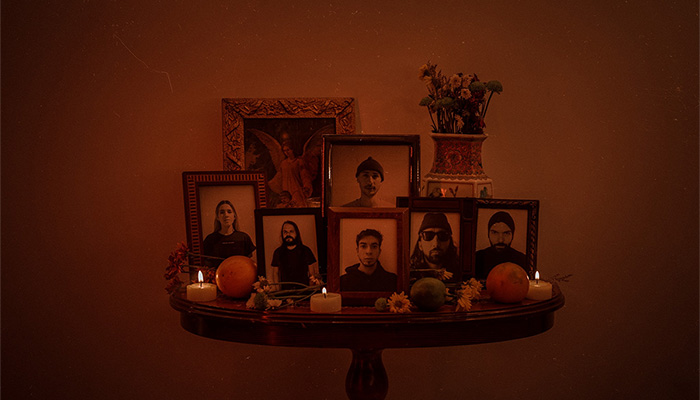
All this is relevant to the release of the Colombian group's third album. Ismael Ayende, An eight-song album that didn't complicate things with a general title other than the band's name. Listening to this recording is to understand the evolution of a musical project that has matured and taken shape., Understanding the points of convergence between rock and electronic music that marked the new generations and the lifelong Colombian sound heritage, that still resonates powerfully in the streets and on the nation's radios. This compilation of tunes that travel across the country is presented in an honest and intelligent way., moving from the Atlantic coast and turning to vallenato and Caribbean dance traditions, and then, as if it were a bus trip along the complicated local roads, to address the nostalgia for mountainous regions and convincingly transform it into expressions that can be assimilated by new generations. This album is a well-thought-out and courageous work, where the excellent leadership of Juan Manuel Osorio, whose guitar work is the great defining element of that fusion, the one that creates the necessary chemistry for this entire production to be believable.
Friends of Zonagirante.com, Give yourselves a little less than twenty-five minutes to listen to this entire work. It's a little gem, a real treat for the ears. Ismael Ayende, on his third album, triumphs in his vibrant musical experiment and in conveying a message of artistic and cultural tolerance.