
By José Gandue @Gandour
The narrative of the great struggles on our continent has been presented in an excessively masculine way. Of course, there have been great heroes who have inspired us and who deserve our deepest respect, with their successes and their misfortunes. San Martín, Belgrano, Bolívar, Morelos, Morazán, O'Higgins… White Creole men who were portrayed in large paintings and full-color illustrations in school books, where they are presented as solely responsible for everything that happened in Latin American development. Most of the time we hear that the role of women in the independence events of the hemisphere was to comfort the troops, take charge of the social events of celebration and say, at times, key phrases to save the heroes from dangerous eventualities. And when all this is established, names like that of Juana Azurduy to properly break the mold, and to confirm that not everything we were told in school was true and that there were great female examples of courage and struggle on the battlefield. It is important to remember that Juana Azurduy was a patriot from Upper Peru who fought in the Spanish American wars of independence for the emancipation of the Viceroyalty of the Río de la Plata from the Spanish Monarchy. and assumed command of the wars that formed what was later called the Republic of La Laguna, for which reason his memory is honored in the south of the continent. She was a colonel in the Bolivian Army, posthumously promoted to Marshal and Lieutenant Colonel in the Argentine Army, posthumously promoted to General. Despite her bravery and undeniable achievements in battle, she died in abject poverty, disowned by her own people. Her remains were recovered belatedly and placed in a mausoleum built in her honor in the city of Sucre.
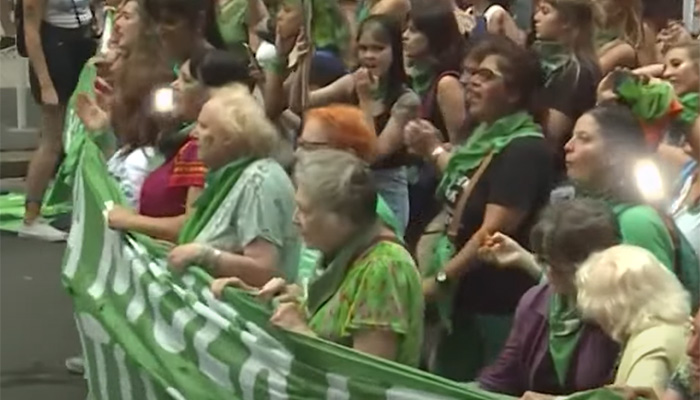
In the end, The story of this icon of Upper Peru is a clear symbol of the need to reconstruct the way we see what happened and what is still happening on our continent. He is a role model who serves as a guide for the struggle that women on this continent have always waged for their rights. For this reason, the Argentine artist Ekeko Nation has taken the song Juana Azurduy, with lyrics by Felix Luna and music by Ariel Ramírez, popularly known through the interpretation of Mercedes Sosa, and has put together a contemporary version in collaboration with Julieta Venegas, Hilda Lizarazu y Miss Bolivia, adding segments of the speeches of Estela de Carlotto, president of the Grandmothers of Plaza de Mayo, achieving a beautifully contemporary version, a blend of traditional Andean sounds and electronic cadences. The video is an intense combination of street performances produced over the last fifty years, ranging from the clandestine rounds of the mothers and grandmothers in Argentina who had lost their sons and daughters due to the dictatorial repression and their complaints to the few foreign press outlets that covered them, including the massive marches against patriarchal violence and for the right to free and legal abortion. The clip is an intense collection of heart-wrenching images, reminding us—if we ever forget—that the major battles of our time have been waged by women of all ages, races, and backgrounds, women who will not allow themselves to be erased from memory or from the writing of history. They (you), our grandmothers, mothers, daughters and granddaughters, are the ones who are giving a new shape to our world And they know, as the song says, remembering the heroic marshal, «"that the revolution comes smelling of jasmine.".