By José Gandue @Gandour
After eleven years of steady growth across all its numbers, , Circular, the Ibero-American music market based in Medellín, Colombia, and one of the most prestigious trade fairs in the sector on the continent, due to the pandemic, confirms that Its new edition will take place from November 12 to 15, adopting the virtual format.
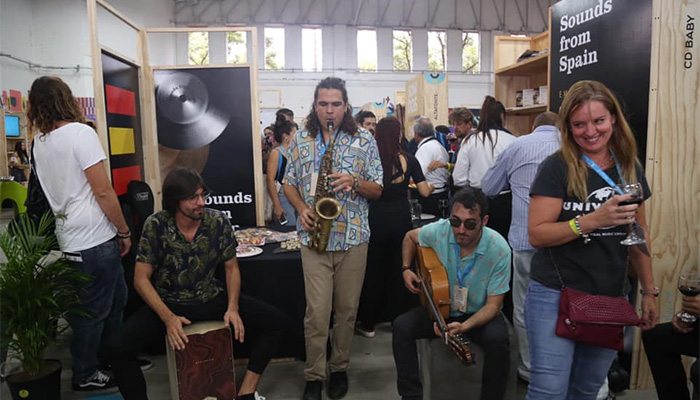
As part of its program, Circulart will present 55 artistic exhibitions from 14 countries And its business meeting will be open to connect 145 Ibero-American artists, 17 agencies and 170 professionals from the music industry from all over the world. Its music fair will be presented as a 2D animation within a digital environment, featuring a general entrance corridor, lobby, and exhibition hall with multimedia interactions. Exhibitors will be able to project images, share information, and interact via chat with attendees at this virtual event in their booths. Much of the program, including art exhibitions, talks, dialogues, workshops, the music fair, business meetings, and networking opportunities, will be open to the public free of charge, with registration available through [link/website address]. www.circulart.org.
Speaking of all this, we took the opportunity to talk with Octavio Arbeláez, founder and director of the event, about the particularities of the fair and, incidentally, about the distressing situation of music these days:
After all this time in operation, how would you define Circulart?
It's a meeting place for Ibero-American music, but it goes beyond simply connecting the value chain and business dealings, becoming a space for conversation about the diverse dimensions in which we operate, both from a cultural and an industrial perspective. Over these 11 years, Circulart has established itself as a platform for exchanging ideas, exploring opportunities, and conducting business, as well as reflecting on the future.
Let me be a little cruel in 2020, but how can we talk about the future in a year with so much uncertainty?
Manuel Mejía Vallejo said, "The future has already passed." The context in which the world operates, brought about by the COVID-19 crisis, sparked many conversations about the collective feeling of that "we" that sought to include us. For the music industry, the crisis can be an important moment to reshape, rethink, and redefine that "imperfect future."«
Okay, sorry, I'm still being pessimistic, but in an industry like music, those who make the music are often the ones who earn the least. Will that change for the better for artists in the future?
While we are physically distanced from one another, we simultaneously feel a strong spirit of solidarity, perhaps due to an unexpected surge in digital communication. In the creative industries, collaborative work using digital tools has long been the norm, but now these tools are being used in entirely new applications. Virtual events unite artists and audiences, and songs are being created in online songwriting workshops or courses, or digital jam sessions. At the same time, greater creative diversity is being fostered, new copyright laws are needed, as is a fair distribution of streaming revenue, and a commitment to a climate-friendly economy that doesn't focus exclusively on growth. Will the music industry be ready for a collective reset that includes these issues for reflection?.
These are the issues that concern us. We know there's a kind of "cultural Darwinism" where the strongest tend to survive, but we, the small ones, try to find those cracks that allow us to breathe and think about the future.
I ask all this because during this pandemic, one of the most neglected sectors has been the music industry, even though we're supposedly in the era of the Orange Economy. Speaking of which: What should be the role of the State and of private companies at this time?
1. The State. Through its public policies, it must preserve the cultural ecosystem, first and foremost, and that of the music industry. It must translate its public discourse linked to the cultural economy into reality and implement a protection and rescue operation for the sector, just as it does with other sectors of life and the economy, and as European countries treat culture as a vital sector for recovery. All companies, from large multinationals to small businesses, are struggling to stay afloat… this «staying afloat» currently involves the digitization of their content and the prospect of distributing it on platforms, which has also generated a serious problem because, ultimately, the business has been advantageous for the platforms and unprofitable for the artists.
That's one of the points I wanted to make. How can we change this system imposed by the platforms? Or should we simply accept it as it is?
That's the central discussion, and one of the topics we'll address. The independent industry must build its niche in "fair trade," and those are the spaces we need to create. That's why the question of "how to work together" isn't naive; rather, it's a call to generate the kind of actions that allow us to build ethical and fair alternatives and spaces for co-management.
How is the virtual nature of this edition being addressed?
It will be held entirely in digital format…but the implications are many. This global crisis is not just a medical, logistical, and economic challenge. It is a challenge to our way of life. It is also a cultural challenge.
How we deal with this will have profound and lasting implications for how we build the future of Latin America. Will we manage the crisis through intense cooperation, trust, and burden-sharing? Or through competition, mistrust, and mutual blame? We believe this crisis can only be successfully addressed through a culture of solidarity.
The crisis is testing our ability to combine empathy and action. It's time to stay in touch with our friends and partners in Latin America, even if the activities we've been working on together won't take place in the same way. We're all thinking about ways to organize them differently; perhaps digitally, perhaps in a new format, perhaps later. We're using our imagination and capacity for innovation to continue working across borders, together, now and for the future.
In this sense, we have generated many synergies with other Ibero-American cultural markets, and with the scene in general to get through this together.
Please tell me about the activities you will be doing during these days
1. Encounters and conversations. Digital humanism is the central theme. The opening speaker will be Adriana Lucía. In this area, we will explore several topics: digital transformation and social transformation. Humanity was experiencing a "civilizational crisis" in which young people, women, and social movements in general were demanding better conditions. The pandemic cannot silence these voices. 2. Book launch on women in Latin American music. 3. Meeting of European (We Are Europe) and Latin American festivals. 4. Mentoring sessions on women's empowerment in music. 5. Algorithms, songs, and ethics: a philosophical reflection by Tomás Balmaceda. 6. Virtual fair of music-related goods and services for all audiences. Showcases of 52 artists, and finally, the traditional business rounds.
What results do you expect from this edition?
This is an emergency release. It's like a cry for survival we're sending out into the air. We want to tell the world that we're still here and that we will fight for the preservation and continuity of our cultural and musical ecosystem. From a music business perspective, we expect this to happen in two areas: -digitally, through venues Digital events, online festivals, etc. – in reality, in the immediate future of live events, we expect the sector to recover in Europe next spring and summer. Or in subsequent years, we'll see that kind of "futures buying" that exists in traditional sectors of the economy.
What will Circulart 2020 sound like?
We want Circulart to sound like hope