By José Gandue @Gandour
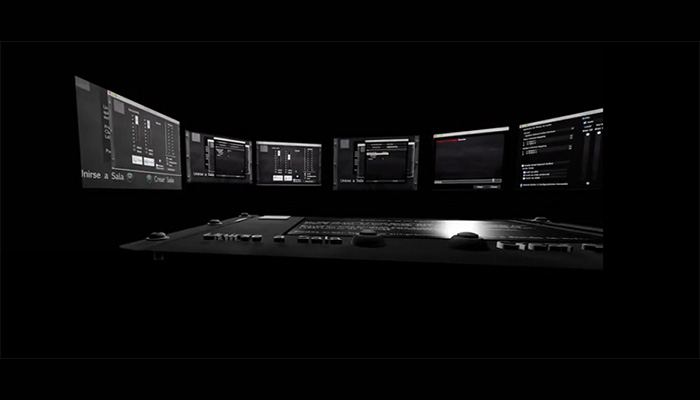
One of the sectors most affected by this pandemic is that of professionals in the music industry. Currently, in most countries around the world, live performances in front of an audience are not possible, nor are there clear options for monetizing their work through other means. But, apart from that, It is not easy to implement the "teleworking" formula from each of their places of refuge, due to the transmission delays they are exposed to on existing platforms.. Tempo, the rhythm, is essential in the interpretation of music, and if that's not right, everything becomes frustrating noise. But a few days ago, in the province of Buenos Aires, more precisely in the University School of Arts of the National University of Quilmes, have made available to the musicians Sagora, a software Free and open source, designed and developed by specialists from that institution, which It allows multiple users to connect in a virtual room and transmit audio in real time without signals being canceled., as happens on commonly used teleconferencing platforms. Given this new development, we have managed to communicate with Diego Romero Mascardó, director of the institution responsible for this project, member of PITEI (Platform of services for digital education) and co-director of the research project “Technological developments applied to the arts”, to tell us details about it:
Where did the idea to create Ságora come from?
Ságora arose from a need. Primarily from my need to be able to teach, since I'm a professor at the Improvisation Workshop at the University of Quilmes, and from my need as a musician, since the lockdown forced us to suspend rehearsals. On the other hand, we had been working on making music online since 2015, so we saw a solution to that need within our reach.
Please tell me a little about the development process of said software
As I mentioned earlier, although we already had some knowledge on the subject, the software we used to produce the concerts with New York University didn't work optimally from our homes because it required opening internet ports, which our internet service providers weren't enabling. So we continued our research project, testing new solutions, and came across a software It worked well, but it didn't have the features we were looking for. So I called on my colleague and friend Esteban Calcagno to analyze this program, called Jamulus, And we also added a recent graduate of the Bachelor's Degree in Music and Technology from UNQ, Nicolás Rodríguez Altieri, to develop what we know today as SAGORA.
How does Ságora manage to be truly useful for musicians compared to traditional teleconferencing platforms?
Common teleconferencing platforms present two main drawbacks when making music. First, they don't allow multiple signals to play simultaneously. If that happens, they usually cancel out signals until only one is prioritized. This isn't necessarily a bad thing, since the program's logic is to allow you to understand someone speaking. The second drawback, latency (signal delay), isn't a problem either. With SAGORA, you have multiple signals playing at the same time without losing audio quality, and with minimal latency that allows for musical practice.
Why make the software freely and openly available to the public?
Because we believe that the role of the Argentine Public University, and the Argentine State they represent, is to serve the citizenry, providing solutions and tools. Possibilities. Those of us who developed SAGORA are products of a free, high-quality, and relevant public education, and we believe that with tools like this, we are giving back some of what our country invested in us. Latin America as a whole is a very unequal territory, full of contrasts. We want it to change. Selling this technological solution, especially at this very particular moment we are living through, would mean we have money but wouldn't be able to walk with our heads held high.
Finally, what has been the users' response?
The truth is, the response has been very positive. Many people have approached us to collaborate on the project. We see many rooms created and many musicians speaking very highly of the software. For us, this is a tremendous joy. We understand that this is the first version and that there will surely be much to improve, and what better way to do so than together, listening to the opinions of our users.
Download Ságora from its official website https://sagora.org/. It is available for Windows, Mac OS and Linux, in Spanish, English, Portuguese and French.