
By José Gandue @Gandour Archive photos
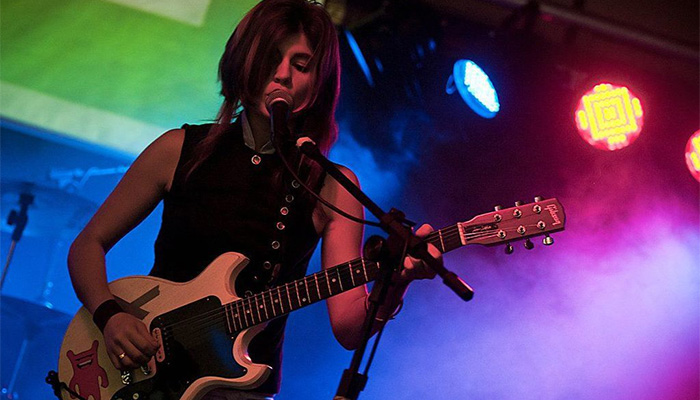
The Argentine state channel Meeting, known for its high-quality cultural documentary content, has premiered Rock Mermaids, A four-part series, each episode 28 minutes long, analyzing and recovering for the memory of the general public, the prominence of women in rock over the last fifty years. In each episode, the production team has invited three local artists from different generations who, through their personal stories, fill in for many that little-told part of history in which women play a leading role. The women interviewed throughout the four episodes of the series are: Carola Kemper; Lula Bertoldi; Mavi Díaz; Andrea Álvarez; María Rosa Yorio; Sofía Viola; the ex-Rouge members: Adriana Sica, Susy Rapella and Patsy Crawley; the ex-Blacanblus members: Débora Dixon, Cristina Dall and Viviana Scaliza; Hilda Lizarazu; Barbi Recanati; Mariana Bianchini; and Sofía and Clara Trucco, from Fémina.
This series, whose first episode aired on August 12, It will be available to view worldwide on YouTube in the official Encuentro space, has been created by Carolina Santos, who has also been in charge of the script, whom we have contacted to find out details of this project:
Where did the idea for the series come from?
The idea stemmed from research I began a few years ago on rock and gender for a book. I noticed many untold stories of female artists, and few documentaries or books written about them. I felt it was important to create content that highlights the prominent role of women artists in rock music.
Why do you think that role of women has been diminished and even ignored in major news reports?
As Dora Barrancos says, historical narratives have always played a game of inclusion and exclusion with their female protagonists; a little recognition for some, silence for others. This has happened in all areas, not just in rock. Until recently, there was a widespread idea that there were "few" female artists in rock. And that's not true: there were and are many women making rock; they are not few, what is (or was) few is their visibility.
How has the public's view of female musical projects changed in the last fifty years?
I think the changes that are happening in the public are also the changes that are happening in society: it is no longer so easily accepted, for example, that there are no female artists at a festival, or that rock lyrics configure stereotypes of "the feminine".
In what way have these changes managed to convince new generations to feel inspired by what their predecessors have done?
I think that depends on each artist; I couldn't generalize. What the series proposes is that, in each episode, the stories and visions of three artists from different generations can be heard, precisely to highlight the historical contribution that has been made over time.
What has been the greatest satisfaction that you and your team have obtained throughout this production?
It's incredibly rewarding for me to be able to share the work of our female rock artists. These are just the first four chapters; it's not something that begins and ends. In fact, we still have to interview key figures in our history who aren't featured in these first chapters, and showcase many other fantastic artists from the new generation. But it's a tremendous joy to have started talking about this and to see that it's sparking so much interest. The greatest satisfaction will come when we see more women on stage, more documentary series exploring the work of our female artists, more books telling their stories, more albums by women in record store windows, and more women's voices on the radio. And I'm sure this will happen.
Finally, why do you think the series should be seen in the rest of Latin America?
Because it is worthwhile to unite our music, just as we unite our struggles.
This is the first episode of the series:
Chapter Two:
Chapter Three:
Chapter Four:
Sirenas Rock technical specifications:
Directed by: Pablo Goldberg
General idea: Carolina Santos
Screenplay: Carolina Santos. Pablo Goldberg.
Production: Daniela García, Florencia Bucich, Javier Rensisvalli
Journalistic investigation: Carolina Santos, Daniela García, Leandro Donozo, Joselo de Diego
Interviews: Carolina Santos, Joselo de Diego.
Voiceover: Sofía Trucco
Delegate producer for Canal Encuentro: Natalia Kaminsky.


