By José Gandue @Gandour Photos by Simona Malaika @simonamalaika
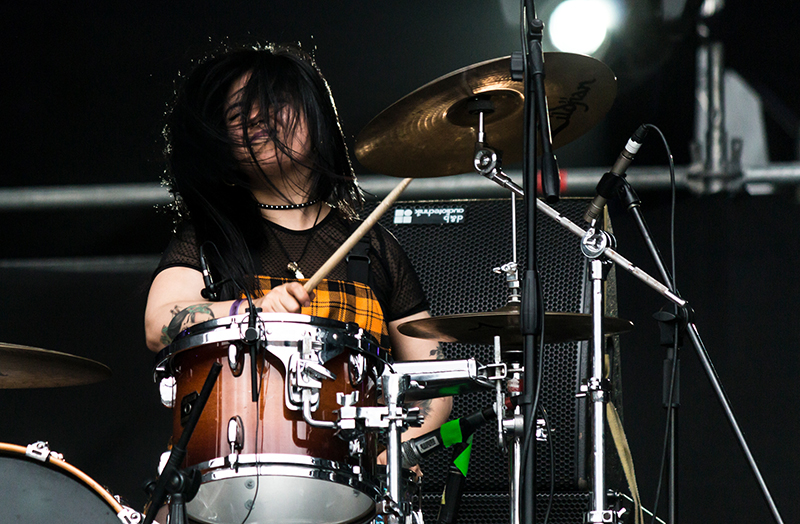
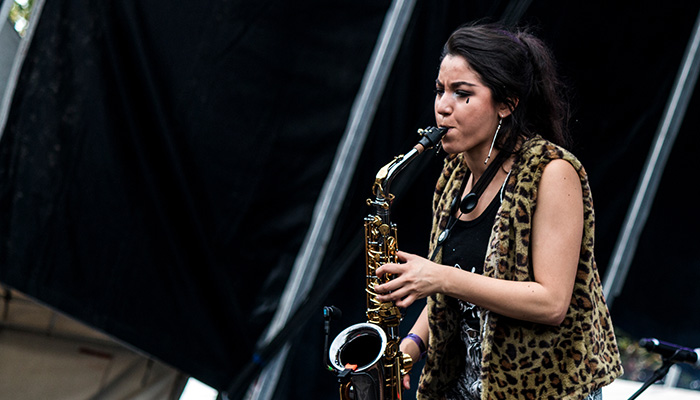
Okay, they had their celebration to the fullest, their photo taken from the sky showing all the lights stretching to infinity. Some say that The inhabitants of the Moon were able to see the brilliance of the contest and then, with delight, spoke at the top of their lungs about the city's biggest festival. The mayor, based on this dazzling event, spoke of future conquests of space, and plans to award the highest honor of the capital's pride to all those responsible for this festival, from whose mouths flowed beautiful verses that prevented the sun from being extinguished by unhappy spittle. Bah, all joking aside, Rock al Parque 2019 is over and we're still arguing about it, not because this or that band was brought in and it cost I don't know how much money (By the way, how much did all this cost?), but because ultimately, it served for a few days of entertainment, a vain attempt to salvage a bad government image and to lose, once again, the opportunity to grow the local scene.
What happened a few days ago at Rock al Parque 2019 It shows how culture is approached in our city, from a state perspective. The established approach, regardless of whether the municipal government has been right-wing, centrist, or left-wing in recent times, has been very similar: Everything is done with a short-term, immediate, and trivial vision. What matters is the snapshot of the crowds, the July 20th speech, and the sudden confetti. It's about getting things done quickly, checking that all the paperwork is in order, and once it's over, avoiding analysis and debate and moving on to the next item. Billions of pesos are spent here, but there's no real investment in building a genuine music scene. They talk about a lot of numbers, but there's no real development of a cultural industry that thrives during the days without massive celebrations and big concerts. The problem stems from one point: The District Institute of the Arts, Idartes, It was not created for those tasks, but rather to provide a foundation for the growth of the city's cultural economy. but to provide simple and spontaneous entertainment to the inhabitants of the capital. And that, dear readers, is a very serious mistake, especially in a country that urgently needs to strengthen its artistic talent in order to consolidate progress, equality, employment, and peace.
[metaslider id="813"]
This is not a demagogic speech. This entire analysis begins with something seemingly superficial: The presence of district projects during the last festival was very limited, and their appearance was not included in the prime-time slots on the main stages. Let's add other points: The auditions for selecting participants from the capital have been held behind closed doors for some time now, without public access. Furthermore, the promotion of their performances through the official press was limited, and things are getting worse., when we see the irregularities raised in the two calls to elect the city's representatives at the event. The Idartes Music Management never dispelled the doubts that arose as they announced certain winners of these competitions. On the other hand, the festival organizers boast about the agreements they've reached with international entities., But they do not contemplate a real exchange to send the artists from the capital in good conditions. Everything planned since 2018 to develop the celebration of the 25th anniversary of Rock al Parque around Bogotá, and announced with great fanfare since then, has been postponed or cancelled, and, if it is carried out to free up some items of the budget, it will not be promoted as it should be.
In turn, Idartes continues to believe that through plans such as DC Live (formerly called Art ConnectionThe city's necessary musical activities calendar is being supplemented by funding bars to present bands, making many mistakes:
1. The relationship of these groups with underage audiences is completely ignored., since the performances take place in venues that sell alcohol.
2. Publicly owned auditoriums located throughout the city are no longer used where these concerts can be held with the presence of the entire community.
3. Music becomes elitist, by only benefiting certain areas of the capital where nightclubs are allowed to operate.
There is no clear policy for developing audiences from an early age. There is no strategy to support new music entrepreneurs in the city's neighborhoods. There is no soft loan policy to finance initiatives to bring musical activities to the entire urban area. There are not enough easily accessible recording studios for the development of local talent. Financial support for local festivals has been severely restricted. There isn't even a radio station broadcasting from the Mayor's office to promote music made in this city (there is an experiment, CKweb, (aimed at a very limited audience, and with no advertising). All of this is lacking, and what's worse, the current music manager of the institution has no plans to change this, since he is, in fact, unfamiliar with the scene and its needs. The root of all these problems lies in the fact that We are not thinking in terms of cultural industries (nor by disguising them with epithets like "Orange Economy" or similar) and thus the matter is useless.
This administration's time is running out. I don't think those in charge have the desire, time, will, or knowledge to change what is happening. They will respond in their press releases with massive crowd figures and the occasional stunning drone shot. The only thing we can recommend, then, is that the candidates and potential mayors of the Colombian capital recognize the need to reinvent this whole thing, taking the success of Rock al Parque as a starting point, and extending that positive experience to all the other cultural venues in the city. Hopefully those who come will doIn something serious.