By Pablo Taricco – @tariccopablo
(Editor's note: Another gem from our friends at NTD.la's archives has been added to our site. This time, we'll cross the Atlantic Ocean and experience an incredible story, though some details always seem to get lost in the shuffle. To spice things up, we've included a fantastic playlist that pays homage to the wonderful city of Rio de Janeiro. Welcome!)
On board the Prince Royal, John of Braganza He watched melancholically as the port of Lisbon disappeared into the horizon. Behind him lay the old banks of the Tagus River with its magnificent Belém Tower and its gray buildings. He could no longer see the city or the wooden pier where they had embarked. The journey he had begun was irreversible, and as he moved further from the coast, a cruel thought assailed him: What would that common woman think of her king when she saw the nobles loading their jewels, furniture, and carriages onto ships? Would history and its books say that they fled cowardly, leaving the people at the mercy of danger?
For weeks, Napoleon Bonaparte's army, under General Junot, had threatened to attack Portugal from the Spanish border. The months of October and November of that feverish year, 1807, had been filled with delaying negotiations and secret plans. France was pressuring the Portuguese court to join the trade blockade against the British, under threat of invasion. But London responded: in the event of a Portuguese blockade, it would destroy the Braganza merchant fleet. Prince John knew he stood no chance against an English attack, and he needed his ships to link Portugal with Brazil, his main source of wealth. But on the other hand, a pact with Napoleon was nothing other than the prelude to his own downfall.
There weren't many options. The decision that John VI, Prince Regent of Portugal, was about to make would change the history of the Empire forever, and would make it the object of criticism and ridicule for 200 years. It was a strategy devised in the 17th century as the kingdom's last resort. And the time had come to implement it.
The relocation of the Imperial metropolis to Brazil was the only way to maintain the power of the Portuguese crown. Just a few kilometers from Lisbon, the Spanish House of Bourbon had witnessed the extinction of its dominions in Europe and America when Ferdinand VII fell to the French. For John VI, the journey was a kind of tactical retreat.
But the decision to flee Lisbon kept the prince awake at night. The storms, the dangers of the open sea, the daunting task of loading a city onto ships were only part of his worries. The foundation of his political power was at stake. Deep down he knew that his people would not forgive that move, however audacious it might be in strategic terms., However incredible it may seem to see a kingdom move across the sea to rise up on the other side of the world. But I had no choice.
That's why the plan was executed quite quickly. They had to set sail before the Napoleonic troops arrived. Secretly, to avoid alerting the population, the holds of fifty boats were loaded with money, jewels and valuables. The Crown Treasury was loaded onto ships, along with the 60,000 volumes of the Royal Library. The memoirs and official and administrative documents of the empire were also packed; horses, oxen, cows, pigs, and chickens were loaded, as well as tons of provisions and fresh water. Art objects, furniture, 20 royal carriages, clothing and even a printing press were loaded onto the ships.
But secrecy was impossible. Just hours before the outcome, the enemy entered Portuguese territory, causing a wave of fear and increasing the desire to embark. Nobody wanted to stay in Europe. But at the moment of setting sail, a heartbreaking scene unfolded that would be forever etched in the memory of Lisbon's inhabitants: On land, the common people, the poor, and the abandoned; on ships, the powerful, the officials, and the priests. According to historical documents, around 10,000 people left Portugal on November 29, 1807, just hours before the invading troops entered the city. As the ships disappeared over the horizon, the French entered a desolate Lisbon. In his memoirs, the Viscount of Rio Seco, an eyewitness to the events, sadly described the crowds wandering through the squares and streets, unable to believe what was happening, with tears in their eyes, cursing the situation in which they had been abandoned.
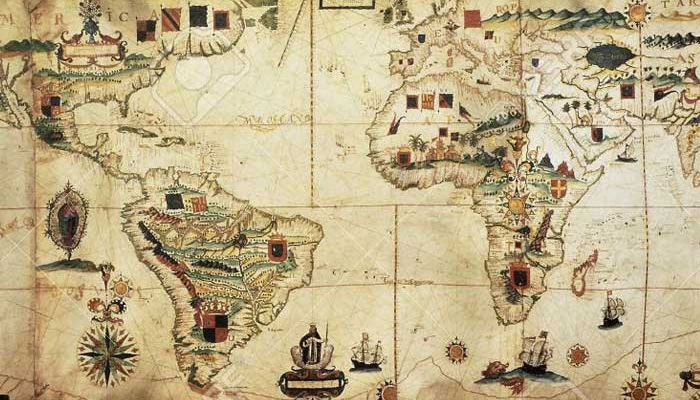
Out at sea, An 8,000-kilometer journey was beginning, opening a new chapter in American history. Around fifty boats, overloaded with people and cargo, were heading out into the Atlantic towards Brazil. But the Portuguese were not alone: The British fleet escorted them. In exchange for protection and support during the voyage, the Braganzas had secured a preferential trade agreement with the new imperial capital, which until then had only one trade route between Brazil and Portugal. In total, the Portuguese squadron comprised eight ships, four frigates, three brigs, one schooner, and 31 merchant vessels. Nine ships, commanded by His Majesty Bedford They were the British support on the crossing.
As the group advanced slowly southwest, they had to stay together, within sight of each other for safety. They needed to avoid being attacked by pirates, but it was also necessary to maintain proximity so they could provide support in case of any mishaps. In the worst case scenario, people and property would have to be rescued from a shipwreck; Less tragic but more likely was the need for assistance in the face of disease, lack of provisions, or mutinies on board.
The main ship of that voyage was an 80-gun warship named Príncipe Real. On board were members of the Braganza family, including Prince Regent John VI, his mother Queen Maria—who had abdicated in favor of her son several years earlier due to her delicate health—Infante Pedro, and his brothers Miguel and Pedro Carlos. On the second ship, christened Alfonso Albuquerque, a 64-gun vessel, traveled the Prince's wife, Carlota Joaquina of Bourbon, and their daughters Maria Isabel, Maria of the Assumption, Ana de Jesus, and Infanta Maria Teresa. The warships were large vessels. They could accommodate nearly a thousand people on board, of which about 800 were crew members, including sailors, mechanics, gunners, and kitchen and maintenance personnel. With a length of fifty meters, a beam of fifteen meters, and a draft of about six meters, they had up to three decks that were continuously occupied by crew and passengers during the tedious days of transatlantic travel.
Although there are few historical documents detailing the 54 days of the voyage, during which the monotony was only broken by problems of hygiene and organization on the Portuguese ships, the chronicle “A maritime journey of the royal family” The English sailor Kenneth Light provides some interesting information. According to the chronicler, the typical food on board the ships consisted of salted beef and pork, peas, oats, sugar, butter, and cheese. Each crew member was entitled to a daily ration of alcoholic beverages: one gallon of beer was distributed per person, and a quart of wine, or half a quart of rum diluted in two parts water.
With that diet, it was to be expected that on such a long voyage the dreaded "seamen's disease" would begin to affect the crew. Scurvy, or "black death," strikes those who do not eat fruits or vegetables for extended periods of time. In his book, Kenneth Light details the symptoms described by the English doctor on board: pain in the extremities, fever, swelling, and bleeding gums. The sailors had to be moved to the sickbay hold., where they were left lying in hammocks, crowded together and in pestilent spaces.
It's interesting to imagine that strange coexistence over the weeks at sea. The cabin of Princess Carlota Joaquina and her daughters, for example, with the palace furnishings arranged geometrically to make the most of the space. In one corner, trunks filled with dresses and jewels; family portraits stacked one above the other beside the mirror. A maid going on deck to ask the thirsty crew for more wine for Her Majesty. A grimy cook serving the Braganzas listlessly…
In a passage of “A viagem marítima” Light describes Princess Charlotte Joaquina's bad temper, dissatisfied with the seafood diet she was subjected to. In a letter addressed to her husband, who was aboard another ship, Joaquina requests the Prince's intervention in order to modify that diet.. However, Juan's response is not included among the documents contained in the chronicle. It would not be surprising if Carlota Joaquina de Borbón, who went down in history as "the harpy of Queluz," did not find a receptive ear in her Prince, perhaps more concerned with the future of the kingdom than with his wife's well-being. Especially considering that shortly before, he had expelled her from the royal palace after accusing her of conspiring against the Braganzas to benefit the Bourbons.
Joaquina, a woman whom history has portrayed countless times as evil and just as often as a Spanish patriot, must have continued to accumulate unpleasant experiences during those 8 weeks overseas. Her husband's snub was followed by an attack of lice that forced all the women on board to shave their heads. So when they arrived in Rio de Janeiro, the ever-curious women of Rio took that unfortunate appearance as a matter of the latest European fashion, which they soon began to imitate.
The arrival in the promised land was on January 22, 1808, when the vanguard of the expedition arrived in San Salvador de Bahia., north of Brazil, and then continued slowly towards Rio de Janeiro where they disembarked on March 8. That day, a gigantic party organized by enthusiastic local merchants welcomed them, demonstrating the joy of the former colonial capital, which from then on would become the privileged center of the Portuguese Empire.
As time went on, Rio adapted to the needs of a capital city. Theaters, libraries, public buildings, and palaces appeared. Trade with Great Britain flourished, bringing about a new reality in the city and in much of the country. The rest of the story is well-known; it's the story of the South American giant. But a curious symmetry brings the dilemma of John VI back into focus. Almost 150 years later, Brazil would see its capital move again, this time to Brasilia. But that new epic would reserve a different place for its protagonists. President Kubitschek and the great architect Niemeyer would be remembered as proud symbols of Brazil.
Prince John, on the other hand, would forever bear a stainThe abandonment of Lisbon remains a wound to the patriotic spirit of Portugal. This is why the Braganzas are still victims of a very particular and damaging kind of cruelty, one that can only be applied by historians and endlessly disseminated by schoolteachers.