By the editorial staff of NTD.la
(Editor's Note: Accessing the archives of articles published in the last decade by our colleagues at Ntd.la allows us to occasionally recover some of the best stories from our continent and, incidentally, refresh the texts on our website. This time, we'll delve into the childhood memories of several of our readers, who will happily recall a popular American series, created in the 1950s and endlessly repeated by local channels well into the 1990s. But we'll also take the opportunity to publish the true story of the hero who inspired this plot, to understand where it all came from. Oh, and of course, we'll indulge the nostalgic among us by showing them a couple of episodes of the old TV show.).
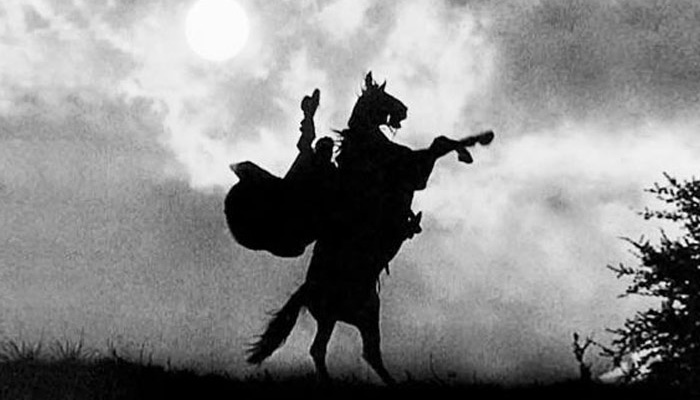
It would not be risky to venture that most Latin Americans saw The Fox at least once in their lives. Moreover, a good portion of the childhoods in our region were influenced by that TV series produced by Disney. and which starred Guy Williams in the role of Don Diego de la Vega. In addition, Sergeant Garcia, the faithful Bernardo, and Captain Monasterio completed the podium of characters in this television series that was recycled endlessly on dozens of channels around the world during the last 50 years. But few know the behind-the-scenes details of the story.
First of all, it must be said that The Fox It first appeared in the American comic book magazine All Story Weekly in 1919, by the writer Johnston McCulley. The saga was called “The Curse of Capristano”, and told the adventures of this masked character who fought injustice in early 19th-century California. But beyond the success of that story whose rights were acquired by the Walt Disney Company To bring it to the small screen, the outline of a true story was hidden within the legend. And that story continues to fuel debate among specialists, who find in "Zorro" the characteristics of two important Mexican figures from the past: Joaquín Murrieta and Guillén Lombardo. Two men whose legends, full of heroism and rebellion, seem to have inspired Johnston McCulley when creating our masked hero.
Joaquín Murrieta, a vengeful Zorro
In 1848 the United States invaded Mexico, depriving it of 55% of its territory: Texas, California, and New Mexico were annexed to the northern country, which shortly afterwards began to exploit the very important mining areas of the region. That era of cowboys, settlers, and traders would later be remembered by the name of an illness: it was the time of "the Gold Rush".
Around 1850, the young Joaquin Murrieta settled in California with his wife. Like many other Mexicans, he intended to take advantage of the opportunities offered by the burgeoning local mining industry. However, that land, which had once belonged to his country, was by then proving to be far too hostile to Latinos. The US government had just passed a law that levied significant taxes on Mexicans who wanted to exploit the area's resources., Meanwhile, the Anglo-Saxon settlers placed particular emphasis on demonstrating to the original inhabitants the need to retreat further and further south. These were violent times.
According to legend, a family tragedy radically changes Joaquín's life: In a strange skirmish near his home, his wife is killed amid a wave of attacks against southern immigrants. From that moment on, Murrieta is transformed. He opposes the arduous path prescribed by tradition with the path of vengeance, and launches into a raid of looting and violence against the murderers of his beloved wife. Thus, a myth is born: Murrieta will become a kind of Robin Hood for Mexicans, especially in the border region with the United States. His figure is remembered today as a symbol of resistance against the Anglo-Saxon invader. Part of that story can be seen in the film «Legendary Bandits of Mexico»
According to legend, in the middle of the desert he formed a gang that would go down in history as "The Joaquin Gang" made up of his 5 henchmen: Joaquín Botellier, Joaquín Carrillo, Joaquín Ocomoreña, Joaquín Valenzuela and his trusted man Manuel García, alias “Three-Fingered Jack.” And like in a movie, together they lay siege to every mining camp in the South, while also stealing horses and cattle from the local ranchers. Of course, as expected, while the Americans cry out for justice, Mexicans admire this group of men who stand up to the invading gringos.
The commotion is such that the fame of the Joaquins soon reaches the California State Congress., who decides to form a special police force to hunt them down. That troop would be called the "California Rangers", and would dedicate itself to pursuing them throughout the southern United States until they found Murrieta and murdered him in 1853.
For many specialists in Mexico, The narratives about the glories of Murrieta are very similar to the adventures of The Fox. Furthermore, the only popular horseman hero in California was this Mexican who did not fight against the defenders of the Crown - as Diego de La Vega does in the series - but against the United States.
Guillén Lombardo, a scheming fox
The other major figure that many point to when talking about The Fox He is an Irishman who arrived in Mexico in 1640, during colonial times. An agent in the service of the Spanish crown, Guillén Lombardo is 25 years old and according to specialists he is a cultured man and a brave swordsman. And although he arrives in defense of King Philip IV, he soon becomes seduced by the separatist conspiracies in the New World.
Embroiled in a series of scandals involving local high-society women, Lombardo finds himself in the spotlight, and the Mexican Inquisition soon accuses him of various crimes such as witchcraft and conspiracy. Upon his capture, among the papers seized by the authorities, a strange proclamation confirmed the suspicions. It was the «"Proclamation for the liberation of New Spain from subjection to the Crown of Castile and the uprising of its natives.". There, a Lombardo ahead of his time argues the illegitimacy of Spanish domination of the American territory.
During several years in prison, Guillén stood out for the subtlety of his libertarian arguments., who question the leadership of the Crown and the inhumane treatment of people. But his life ended abruptly when he failed in an escape attempt and was burned at the stake in 1659.
«"He seems like a character from a novel. He is one of the foreigners who participated in our history."», says Mexican historian Andrea Martínez, who published Don Guillén de Lampart. Son of his exploits. Furthermore, he asserts that his work sought to clear up doubts about this individual who was not only linked to The Fox, but it was the subject of the most dissimilar interpretations. In 1870 his figure was rescued by the Mexican writer Vicente Riva Palacio, who wrote Memoirs of an Impostor, where he presents it with literary flourishes, placing the letter “Z” as a symbol used by his revolutionary followers. Some decades later, according to specialists, the American writer Johnston McCulley took elements from Guillén to create his character Diego De la Vega in the saga "The Curse of Capristano".
In short, whether it's Murrieta or Guillén, The true story of "Zorro" places him close to the hearts of Mexicans and their rebellious history.