By Pablo Taricco – @tariccopablo
(Editor's note: Another incredible story recounted by our friends at NTD.la, which we've obtained from their archives for our readers' enjoyment. In addition, to complement this story, we've included a remarkable playlist of Puerto Rican rock that's well worth listening to.).
Dolores Sotomayor boarded the train silently and sat down. She adjusted her jacket over her skirt, looked out the window at the platform, and tried to clear her mind. The scene was commonplace: thousands of men and women on their way to work, in their suits and overcoats, wearing hats, holding their children's hands. Hurrying through the corridors, they went down the stairs and climbed into the train line. The terminal had always impressed her. Penn Station, as the Americans called it, had enormous columns at the entrance. And the height of the domes was so great that if one stopped to look up, one would get dizzy.
But that day was not like any other. Despite the hustle and bustle of an ordinary morning in New York, in Lola's eyes everything happened slowly and silently. She had just begun the most important journey of her life, and the weight of that decision made her feel lighter. On the way to Washington DC, the suburbs blurred past the train window. The gray of winter was giving way to the colors of spring, which was already peeking through the city's sky. It was March 1, 1954.
Lulled by the sound of the locomotive, memories began to surface and led her back to her mother's house on the island. He was born in 1919 in San José de Lares, a small town in northwestern Puerto Rico. Gonzalo Lebrón, his father, was a ranch foreman and an atheist. His mother, Rafaela Sotomayor, had raised five children with dedication. In the mid-1930s, Lola decided to travel to San Juan to study sewing, with the intention of migrating to the United States later and finding a job. Once in the capital, he became interested in the cause of Puerto Rican independence, which at that time was a U.S. territory. During those days, thousands of people were mobilizing, demanding the release of the rebel leader. Pedro Albizu Campos, who remained in custody.
In 1940, she left for New York City and settled in Little Italy, a working-class Latino suburb in the city's center. The years would slowly lead her toward her destiny. By 1945 she would become the main figurehead of the Puerto Rican Nationalist Party in the United States. In the early 1950s, after the defeat of the insurrection led by Albizu on the island, Dolores Lebrón Sotomayor was chosen to launch the riskiest independence operation ever attempted on American soil.
– Excuse me"–" said the woman with whom Lola shared a seat as she passed by her to get off at the Philadelphia station. The train was already halfway there, about two hours from Washington. Seated in front of Dolores was Rafael Miranda, a 25-year-old Puerto Rican, a fervent supporter of the independence cause, as was Irvin Flores, 27, who was a little further back, and then Andrés Figueroa, 29.
The four rebels appear not to know each other. As planned, they are to arrive in Washington and head straight to Congress. After several weeks of planning, they had managed to develop a fairly solid plan. Before that, they had had to discard dozens of options. Since that afternoon when Albizu's order had arrived, the prospects for success had improved considerably.
Lola recalled that moment with the precision of someone seeking to ensure a meaning: Ruth Reynolds, a social and religious activist who sympathized with the cause, brought the message. She came directly from the island, where she had met with Albizu Campos. She walked through the entrance door of the snack bar and headed to the back table, avoiding the usual bustle of the restaurant. Dolores was waiting for her there, looking somewhat impatient. They sat down facing each other. It was cold outside, and Ruth's hands were inside a gray overcoat that reached her knees. From her right pocket, she took a piece of paper and slid it onto the table. In his own handwriting, the boss gave a delusional order: attack the White House, the Capitol, the Pentagon, and the Supreme Court.
First, a moment of surprise, then a shiver ran through Lolita's body. The White House, the Pentagon, Congress, and the Supreme Court? Was it a feat or madness? There was a second of hesitation, but then he took the paper, put it in his mouth and chewed it slowly until he swallowed it.
Everyone knew it: Attacking all four sites was technically impossible. There was neither the money, nor the personnel, nor the planning capacity sufficient for such an attack. Furthermore, if the objective was to give visibility to Puerto Rico's cry for freedom, it would be enough if they successfully carried out at least one of the missions. That's what they focused on. Once they had solidified a plan, Lola convinced the Party leadership of the advisability of attacking that one point only: the Capitol.
Now was the moment, and there was no turning back. When the train stopped in Washington, the die was cast. None of them had a return ticket. Deep down, everyone knew that this action was suicidal. Upon leaving Union Station, Lola bought a rather stylish lady's purse and placed inside the two things she had brought with her: a semi-automatic .45 caliber Luger and a small Puerto Rican flag. They were only 15 minutes away from Congress on foot, so they started walking.
The rest of the story unfolds in just a few flashes. The four enter the building with determination and take their places in different sections of the boxes. On that March 1st, Congress was debating the advisability of a modification to the immigration law. There were exactly 243 congressmen present, and at 2:42 pm Lolita gave the order: stand up, with the island's flag in your left hand, and your weapon in your right, she shouted “Free Puerto Rico now!”.
At that moment, dozens of shots were heard. The four Puerto Ricans emptied their magazines from the stands. The chamber was in chaos: shouting, running, men in suits crawling on the floor, and the dull thud of bullets echoing through the hall. For a few minutes, that Puerto Rican commando subdued the United States Congress with fire and sword, proclaiming a “Free Puerto Rico” in the colonial capital.
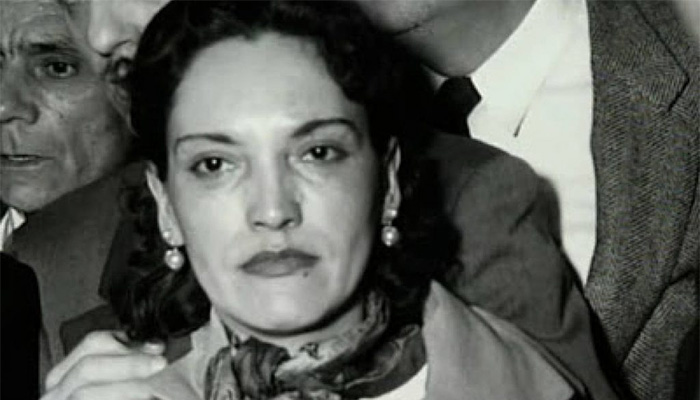
But it took the police only a few minutes to determine the attackers' location. The vast majority of the MPs had managed to escape. Five of them had fallen wounded on their benches. Not a single death. Security didn't take long to subdue the attackers, and when Dolores Lebrón left the Congress in handcuffs, half a dozen journalists had gathered outside the Capitol.
“I didn’t come here to kill anyone” Lolita told the officer, just before being forced into the patrol car, “I came to die for Puerto Rico.” .