
By NTD.la Staff
(Editor's note: In the wonderful archives of our friends at NTD.la, we found this unmissable chronicle about a scandalous and, amidst his eccentricity, incredibly attractive character. To accompany this piece, we've dared to create an irreverent playlist of 13 songs from Argentina, Colombia, El Salvador, Puerto Rico, and Ecuador, spanning hip hop, reggaeton, punk, blues, and rock and roll, all sharing a common obsession: the power and symbolism of the whip, that instrument so admired in the world of sadomasochism.).
Raúl Barón Biza slumps into an armchair in his apartment on Esmeralda Street, in downtown Buenos Aires. He has glasses ready. He offers whiskey. There are special guests in the house. His ex-wife, Clotilde Sabbatini, and a group of lawyers. She doesn't want to drink. She's nervous. All she wants is to leave quickly. Raúl summoned her today., August 17, 1964, To finalize a separation that had already begun in practice some years ago. All that remains is to give it the legal framework. He seems calm. Until he throws the contents of the glass in his ex-wife's face. The whisky is not whisky but a mixture of acids that cover half of Clotilde's face and part of her body. She rushes to the nearest hospital emergency room accompanied by her lawyers. Amidst the proceedings, no one pays much attention to the man who disengages from the situation he created and heads to his room. He grabs his .38 caliber revolver and shoots himself in the temple. He was born in Córdoba in 1899.
Millionaire, eccentric, playboy, writer; this sort of literate agitator who wrote pornographic novels and he could have received the title of the Argentine Marquis de Sade. He also financed armed groups to defeat José Félix Uriburu two years after the military man staged his coup in 1930. But he was always a leading figure in the most radical wing of the UCR, which he joined and left on three occasions. This is how he met his second wife, Clotilde Sabbatini, daughter of the historic leader of the Cordoban radicalism Amadeo Sabbatini.
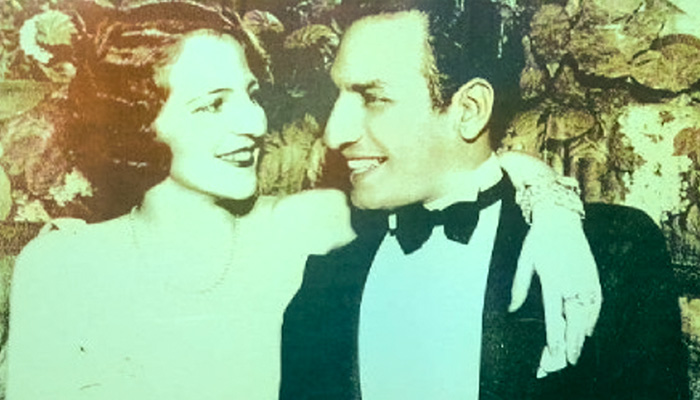
But before Clotilde, Biza succumbed to the beauty of the Swiss actress Rosa Margarita Rossi Hoffman; known as Myriam Stefford. They met in Venice in 1928. She was 23, he was 29. Two years later they married in St. Mark's Basilica and quickly settled in Argentina. Stefford's vitality knew no bounds. Literally. An aviation fanatic, She wanted to become the first woman to unite the entire country from the air. It successfully completed its first leg: Buenos Aires to Rio de Janeiro, followed by a series of stops in 14 Argentine cities. Things began to go wrong when it had to make emergency landings in Santiago del Estero and Jujuy. The next destination was San Juan. It was the last. Near the town of Marayes, in that province, The actress's small two-seater plane crashed to earth.
Around this event, as throughout Biza's entire life, Vines of myths and legends would grow. Some say the Swiss woman was having an affair and that the writer orchestrated her death. Others say it was simply a tragic accident. The truth is that even today you can still see the gigantic monument built by Fausto Newton at the behest of Biza. It is a building over 80 meters high and 15 meters wide, located next to Provincial Route 5, in the Los Cerrillos area, between the towns of Alta Gracia and Córdoba.
Up to that point, Biza had written three books: From the dream (1917), Soul and flesh of a woman (1923), Laughter, tears and silks (1924). His manifesto for life was still missing, The right to kill (1933-1935), a work that earned him titles of misogynist, anti-Semitic and - surely the most painful for him - a terrible writer. “While I was imprisoned, I finished my last book, “The Right to Kill,” a thesis novel in favor of the oppressed and dispossessed.”, Biza recounted this after being released from a prison in Montevideo, where he had been locked up for inciting a strike. The book suffered constant censorship and was never republished. Today, a cult item, the prices of some copies of The Right to Kill Prices on Mercado Libre are very high.
Thanks to his contacts with the radical leadership, he met Rosa Clotilde Sabattini, 20 years younger. They married in 1935 and did so in secret. She was 17 years old. They traveled the world until finally settling back in Argentina in 1950. Meanwhile, Biza continued writing. In 1942, he published Final Point, and once again he had to face legal proceedings for “obscenity”. As in almost all of his work, eroticism, nihilism, and irony set the rhythm of the lines.
By 1953 the Biza-Sabattini marriage had imploded. Clotilde moved to Montevideo and Raúl accepted a diplomatic post in Hungary. Raúl saw her again in 1964 to finalize the divorce. He summoned her to Esmeralda's apartment to disfigure her. He orchestrated the entire disguise operation. The acid did the rest. Clotilde will jump into the void 14 years later, tired of the thousand operations that could not recover her face.
Jorge Barón Biza, the couple's son, a journalist and writer, captured his family's story—specifically his mother's struggle to reconstruct her face—in the book The desert and its seed, which was reissued by Eterna Cadencia in 2015. Jorge, like his mother, also jumped from his window, in September 2001.