By Pablo Taricco – @tariccopablo
(Editor's note: Another story we've taken from the archives of our friends at NTD.la. Now we move on to Brazil, that giant we know so little about and with whom we deserve to strengthen our ties and friendships. Here's a story about one of its leading musical figures of recent times.).
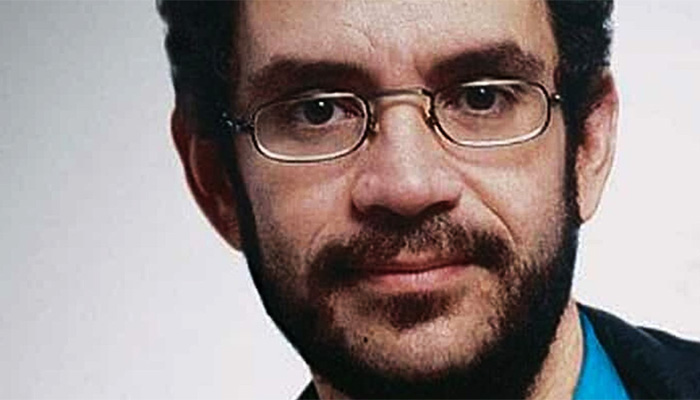
When Renato Manfredini Junior was diagnosed with slipped capital femoral epiphysis, he thought his life was over. He was 15 years old and couldn't walk or make any effort. His bones could not support the weight of his own body. He had to get used to spending his days in bed and getting around in a wheelchair. Those were two years that changed his life.
He was born in Rio de Janeiro in 1960, but spent much of his childhood in New York. His family had to move following Renato's father, an employee of the Bank of Brazil. Two years of school in the United States gave Junior a good command of English, which allowed him to launch himself into a whirlwind of reading and listening to records that would shape his personality as a young snob.
When the Manfredini family finally settled in Brasilia in 1973, Renato found a favorable environment to develop his interests. This experiment in capital, designed by Niemeyer from scratch, was teeming with professionals, bureaucrats, and diplomats. It was the ideal breeding ground for him and for a generation of young people who looked beyond what was indicated by the dominant Tropicalism in Brazil.
In the late 1970s, the death of Sid Vicious sent shockwaves through the world of rebellious rock. So much so that the British music magazine Melody Maker published a letter dated March 31, 1979, which read: “Nothing hit me as hard as Sid’s death. I cried all night, and it was like a kind of painful scream, not just for Sid, but for everything.”. Towards the end, the letter warned “I’m going to do for him everything he did for me.” It was signed by a certain Eric Russell, singer of the 42nd Street Band.
Nine thousand kilometers from London, in a corner of Renato Manfredini Junior's room in Brasilia, the 42nd Street records, along with various notes and comments about their shows, The band's musical profile and the story of Russell, its leader, were neatly stacked. But these were just glimpses of a story that unfolded in the mind of a boy lost in his thoughts. They were the product of the thousands of hours Renato had spent in bed between the ages of 15 and 17, a victim of that strange bone weakness that prevented him from walking and had confined him to bed.
His feverish teenage imagination had invented a frontman, ...with a band, records, and history. It had even led him to write that letter some time later., signed by this sort of alter ego of his called Eric Russell. According to journalist Arthur Dapieve in his biography "Renato Russo", the young Junior created this character inspired by two personalities he admired who, curiously, shared a certain phonetic similarity in their surname: the philosophers Bertrand Russell and Jean Jaques Rousseau.
When Renato managed to overcome his illness, He felt he no longer had time to waste. He had set out to be the protagonist of that rock story he had imagined in his bed among books, records and guitars. He wanted to become the leader of the greatest rock band in Brazilian history, and he was going to do it with a fitting name: Renato Russo.
It was 1978 and Aborto Eléctrico was born with a strong punk influence. Primarily influenced by bands like the Sex Pistols, The Smiths, and The Cure, Renato founded his first band and showed he had what it took to lead a rock group. Besides his musical talent, he was prone to drunkenness and public scandal, which helped him build a certain reputation. in a Brasilia eager for novelties and full of middle-class youth tired of Bossa Nova. Part of this stage in Renato Russo's life can be seen in the Brazilian film We're So Young, directed by Antonio Carlos da Fontoura, which portrays the intense youth world of Brasilia in the late 1970s.
With the breakup of Aborto came a brief but intense solo career, where Renato performed with his acoustic guitar as a support act for every show in the city. Some call this Russo's "Dylanian period" because of the intense poetic component of his songs, which are direct and profound., but also for his stage performance inspired by the legendary Bob Dylan.
But in 1982, after many attempts and several disappointments, Together with guitarist Dado Villa-Lobos and drummer Marcelo Bonfá, he would form Legión Urbana and would definitely find his place in the music scene.
José Emilio Rondeau, the producer of Legión Urbana's first album, once said that “Only a blind or deaf person could fail to realize that Renato was John Lennon, Bob Dylan, Elvis Presley and Paul McCartney in a country that had no national equivalents.”. And beyond that rather presumptuous comparison, Rondeau highlights the central place that Russo occupied in Brazilian rock of the 1980s.
The first studio album, Urban Legion, It was released in 1985 and had an immediate impact. Songs like "Será", "Geração Coca-Cola" and "Ainda É Cedo" gave Russo national visibility., with powerful melodies and well-constructed lyrics that soon began to be chanted at the shows. But the leap in popularity would come a year later in 1986, with the release of the second album Two. With over a million copies sold, it got the band on every radio station in the country. Songs like "Índios" and "Tempo Perdido" were played. But a phenomenon very characteristic of the relationship between Urban Legion and its fans also began to occur. Songs like “Eduardo y Mónica,” a folk ballad without a chorus, resisted by music programmers on the radio, were sung along to with fanaticism at shows. Something similar happened with the third album. What country is this?, from 1987, whose most successful song was “Faroeste Caboclo” a composition of 168 stanzas without a chorus that was sung like a mantra by thousands of young people at Legion concerts. Of course, it was also played on the radio, taking the place of three or four songs on the charts, which was considered a major commercial success. As expected, the band's fame skyrocketed, and the whirlwind of radio and TV interviews, live shows, travel, hotels, and everything else began.
But of course, not everything was rosy in Renato's life. According to his friends, he frequently suffered from depression and would spend entire days locked in his apartment. He even attempted suicide by cutting his wrists in 1984, but failed. He then contracted AIDS and his problems with drugs and alcohol worsened. “I was in my Kurt Cobain era” Russo himself said in a 1994 interview.
A few years ago, Ciro Pertusi, from Ataque 77, one of the first fans of Legión Urbana in Argentina, said that if it were necessary to make comparisons, The Legion should be compared to Patricio Rey and his Redonditos de Ricota. And the parallel is interesting. Just like with Los Redondos, Renato Russo's songs are chanted by his fans as if they were biblical passages. Furthermore, just like Indio Solari's band, they became a typically local phenomenon, very difficult to export to other latitudes. And as if all this weren't enough, the popularity of Legión Urbana also forced them to play live less and less. His shows drew such large crowds that they became uncontrollable, and resulted in legendary riots such as the one at the Mané Garrincha Stadium in 1987.
On October 11, 1996, Renato Russo died from complications related to HIV. He released eight albums with Legión Urbana and two solo albums. His songs are still sung by an entire generation today.