
By David Stewart @MigrantMotel
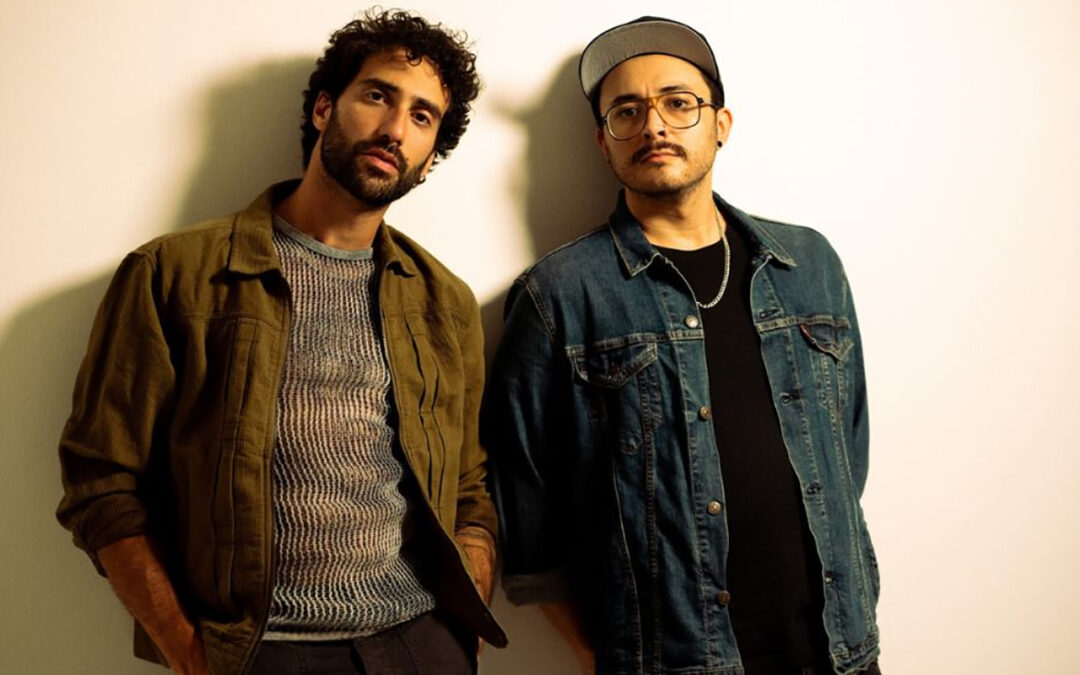
Editor's note: In 2017, David Stewart, a Peruvian, and Chava Ilizaliturri, a Mexico City native, They joined together to create Migrant Motel. Although both are from Latin America, they met in Boston and started making music in English. But now they have decided to make a change and return to their Latin roots, so they are creating songs in Spanish. Their latest album, El Juez y la Furia (The Judge and the Fury), perfectly reflects what they want to convey. David and Chava seek to recapture that feeling of home that comes from looking back and remembering where you come from. To achieve this, they didn't just change the language, but they also incorporated expressions and regionalisms that make the album and its music unique and authentic. We invited David to write about his experience as a migrant musician, especially at a time when the color orange threatens a mass deportation of "illegals," and also to explain some details of his album., a musical gem worth listening to repeatedly.
To be completely honest, When Zonagirante.com asked me to write a piece about my multicultural experience as an artist, I felt very intimidated.. Being an artist today is difficult and complicated, and I want to be able to detail my experience as honestly and directly as possible. So please excuse my “Spanglish” at times, but like every day of my life, this story is best told in two languages at once. Thanks friends.
I moved to Florida with my parents when I was 7 years old. In Lima I had always been an extroverted child and the first few days in the USA I didn't understand why nobody in Florida wanted to be my friend, nobody talked to me. My mom always tells how I used to come home from school sad, saying “Nobody wants to be my friend because I’m ugly,”, Without realizing it, I was speaking to everyone in Spanish. I think that's where my experience as a... began. “outsider”- Even when I learned to speak English better, I still felt a tremendous difference between the American world outside and the "mini Lima" I had at home. My grandfather taught me to play Creole music in our Pompano Beach apartment. And at times, it felt like we were in Peru, with the smell of ají de gallina in the air and me practicing my "tundete" while my grandfather sang This secret. But then I was transported back to the USA when I was in my school's theater rehearsing for The Sound of Music And my teacher told me that “Captain Von Trapp can't have a Mexican accent David, you have to work on your pronunciation.” From the beginning it was a world of many contrasts, many ‘'micro-aggressions'’ and enough “macro aggressions”.
For a while, I felt that rock music should be in English. The first song I learned to play and sing was Let It Be of the Beatles, although I played it on my grandfather's folk guitar. Then I got more into the world of rock and roll and discovered Led Zeppelin, AC/DC, Rush, and all the heroes who would change my life. Being Peruvian in the United States, I always felt like I was in the middle of two worlds—it was very obvious to me that I wasn't American, but I also didn't feel 100% Peruvian… It was a strange mix to play baseball with my friends in the morning and in the afternoon watch old episodes of Pataclaun with my parents at home. One foot here, one foot there, and barely able to stand. And then when I started college and decided to form my rock band, it felt natural to imitate Robert Plant and David Bowie. But strangely enough, those who came to see us at our shows in the cold of Boston They were our Latino friends – the Mexicans, Colombians, and Venezuelans who sang the lyrics with accents.
This year feels like it's been the time that has been the most “feeling” I have had immigrant experiences. For a few years I was a singer in elegant clubs in Los Angeles, until I was fired, from one day to the next, for singing in Spanish. This racist act prompted me to write our first songs in my native language, something Migrant Motel had considered for a long time. That's how it came about. The Judge and the Fury, an album with all the energy and Latin pride that that experience made me feel. And thanks to that damn gringo, I ended up entering the world of musical direction., working with artists like Sofia Reyes and Cuco. In an instant, my Latin identity ended with my only source of income., But at the same time, it opened doors for my band to the most wonderful audience in the world and paved the way for my career as a Latin musical director.
I've been incredibly lucky in my career. Although being a Latino musician in this country has brought me a lot of pain, It has also brought me an unimaginable amount of joy, and that feeling of not being American or Peruvian enough has changed. I am an immigrant who was lucky enough to come to the United States thanks to the love and courage of my parents. And that in itself makes me 100% American. And nowadays, on Sundays I try to make my own homemade ceviche while listening to Eva Ayllon, and every time Peru plays, I suffer with the whole country. That also makes me a Peruvian 100%. Now I also cook a lot of Arabic food, since my girlfriend is from Palestine, and our dog is named Mochi, after our favorite Japanese dessert. It's the unique combination of influences and experiences that makes each of us so special, and that's what I try to reflect in my art with every song.