By the Zonagirante.com team @spinning zone Photos from Dr. Didi's archive
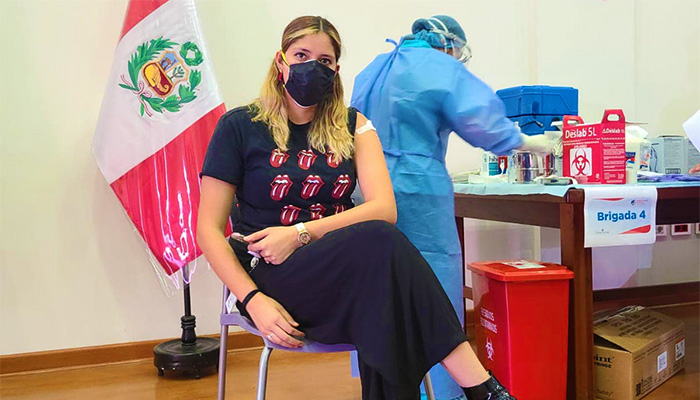
She is Diana Matos, coordinating doctor of hospitalization and NICU of Ate Vitarte Emergency Hospital (Covid hospital) and professional in the area of COVID and non-Covid emergencies in the Anglo-American Clinic, From Lima, Peru. But Zonagirante.com followers surely know her better for her musical career, where everyone refers to her as Dr. Didi. At her concerts, her fans have seen her go on stage in her uniform, which she often cannot take off before her performance, as she goes directly from her medical appointment to the musical event. She will present her new album in a few weeks (Emergency Recipe Book (its possible name), and will be available in various formats to the general public. But we've come here because of her medical work. Today we saw her photo, with her country's flag in the background, receiving the first dose of her Covid vaccine—something that shouldn't surprise people in these times of desperation and confinement, but, Incredibly, we have found ourselves surrounded by deniers and flat-earthers who believe all sorts of nonsense about the need for inoculation., believing more in gossip than in science itself. We saw the photo of her injection with pride and immediately went to her so that she could resolve our doubts about it with the authority she possesses.
How did the vaccination go for you?
Very well, so far I don't feel anything, not even pain.
Did you ever have any doubts about getting vaccinated?
None. To be honest, I read up on it first and compared the vaccines that are on the market with the one that was going to arrive in Peru. Also, this week I've seen five people on my team get sick, so I told myself... “"Hang on a little longer, the vaccine is coming soon."”.
Do you think it's reasonable for people to have doubts about getting vaccinated?
It's good to ask questions, but it's wrong to be misinformed and make judgments based on ignorance. I understand that just as there hasn't been investment in healthcare for many years, there hasn't been investment in education and technology either. That's why vaccines seem so unfamiliar to the general public. If they knew all the diseases we prevent with vaccination, how they were discovered, and how they're made, they wouldn't have any doubts. There's a lack of access to quality information. It's easier to read a WhatsApp chain message or watch a YouTube video than to try to understand a biology textbook.
In general terms, what should people know about the vaccine?
It's a simple method in which a part of a virus or bacteria (incapable of causing infection) is introduced into our body so that our immune system recognizes this enemy and produces antibodies. This way, when we are exposed to the disease directly, we don't get sick because we have already developed defenses. Vaccines are usually created for deadly diseases or those that cause lasting effects, such as measles, polio, tetanus, pneumonia, and others, and now COVID-19.
What percentage of the population do we need to be vaccinated to return to "normal," to concerts, to festivals?
I would tell you 100%. Nobody should go unvaccinated.
Finally: what should we learn from the pandemic in terms of public health?
Comprehensive health encompasses promotion, prevention, recovery, and rehabilitation. The budget focuses solely on recovery and neglects rehabilitation. In Peru, we have hospitals dating back to the 1950s, which lack the capacity to serve the population of 2021. No one invested in health, education, or technology, which is why we were unable to cope. Furthermore, at an individual level, we suffer from poor nutrition and lifestyles. Remember that a well-nourished body that exercises and sleeps well is better prepared for this and other infections. We have seen how people with conditions like obesity have suffered the disease in its most severe form.