By José Gandue @Gandour
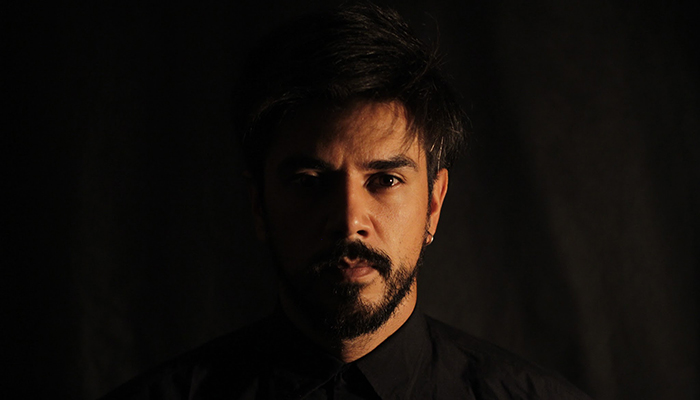
Photo Rodrigo Vique
While researching new Uruguayan music on YouTube, I came across a fascinating video of a song called Montevideo. A simple clip, made among friends., who had all the heart and grace to captivate at first sight. That's how I discovered the work of Rodrigo Odriozola, who artistically calls himself Toto Yulelé. His audiovisual work was included among the best Latin American video works of the year.
This Uruguayan is a singer-songwriter with entertaining and striking stories in his compositions. It's clear that he's someone who knows how to enjoy his music and doesn't need many gimmicks to impress. Just a few days ago, Toto Yulelé released his album to his fans. From when I aluminized, A compilation of songs that traverse every emotional peak, a seductive work easily understood by fans of contemporary Latin American music. Its themes range from a fresh, modern take on the folklore of the Southern Cone, in The Champion's Candombe,...even a barely contained sadness expressed on a discreet keyboard, as can be heard in Matilde's backpack. From when Aluminé It's a dazzling little box of feelings, A brilliant album, it must be said. Therefore, we met with this man from the East and asked him the questions that arose from listening to his work several times:
Let's start with the one of all interviews: What does Toto Yulelé mean?
It's just a pseudonym I use to present my solo project. Toto is my nickname from childhood, and Yulelé refers to a song by the Uruguayan musician Eduardo Mateo, which is also part of an album that greatly influenced me, Mateo sólo bien se lame.
If someone asked you to describe your sound, what would you answer?
I write songs; I'm a singer-songwriter, and I feel heavily influenced by Latin American and Río de la Plata rhythms. I'm interested in developing research on these folk rhythms from a personal and contemporary perspective, within my own context, using my own language and experiences. When people ask me to define myself, I say I'm a "sensitive singer-songwriter.".
Who do you recognize as direct influences?
Jaime Roos, Eduardo Mateo, Fernando Cabrera, Jorge Lazaroff, and Atahualpa Yupanqui are direct influences on me. So are my singer-songwriter friends: Damián Cacciali, Salvador García, Papina de Palma, and many more.
They say Montevideo is a particularly nostalgic city, is that reflected in your music?
Montevideo is a beautiful city, full of life. It also has its nostalgia and its tranquility. I don't know if that's reflected in my music, but I do live in Montevideo, and Montevideo is a part of my life, so it's inevitable that it comes through in my music. I think the music I make is very Uruguayan.
Let's talk about your new album, From when I aluminized, At what personal moment in your life did this material emerge?
They reflect a time when I decided to dim the light on things a bit, to explore my darkness and shadows a little more. It's also a nocturnal album, recorded entirely at night. It took me two years to record, so I personally consider that I've already passed through that stage, but the album reflects it very well.
It's a varied album, where at times you feel a sense of melancholy and at other times it explodes with surprising joy. Is the character who narrates all these feelings really that intensely changeable?
Yes, but more inward than outward. It reflects internal processes and deep reflection. I'm a much more moderate person; I certainly don't show all those emotional outbursts. That's why songs are my outlet.
What are your songs about?
They talk about things that happen to me, things I think about or interpret from what I see or feel. I try to develop a writing style that is clear and easy to understand. As a listener, I sometimes find it difficult to understand "highbrow" poetry, so I try to make my lyrics clear and talk about concrete things, and from there, arrive at reflection or the poetry of things. Ultimately, my songs are always about me.
I feel that simplicity in your compositions is a motto you fiercely defend, right?
Yes, it's something I'm interested in developing in all aspects of my life. Simplicity and conciseness—not saying too much, saying only what's necessary to convey a message, and doing so clearly. And at the same time, making things easy, not overcomplicating them.
What is your relationship like with your audience? How do they receive your presentations?
It's good; I'm used to playing in small venues and having a lot of contact with the audience. I like that it's interactive, feeling the energy and playing with the moment and the uniqueness of each performance. I've received great feedback on the last album, and it makes me very happy because it's a lot of work. Live, I usually perform just with my guitar, in a troubadour style. That's what I enjoy most.
From the current Latin American music scene, what would you highlight the most?
I'm very interested in sounds that are new to me, that break away from the commonplace. I'm also very interested in experimentation between folk roots and more modern sounds. There are many musicians I follow and try to keep up with their latest releases. Currently, I'm very interested in the work of Franny Glass, Pau, and Bianchi in Uruguay, and in Argentina, bands like Tototomás, to name just a few examples.
What are your plans to conquer the continent?
I would love to travel and explore the continent with my music. I currently travel a lot to perform in Argentina, and the experience is wonderful. This latest album was conceived with the aim of transcending my borders and reaching a wider audience. In Uruguay, it's sometimes difficult to secure the resources to tour, but we're gradually achieving this by building collaborative work communities in different countries, where we try to empower and support each other. In Montevideo, I host many musicians at my home, who then host me when I'm traveling, and it's really lovely because we not only discover new places but also forge wonderful friendships.